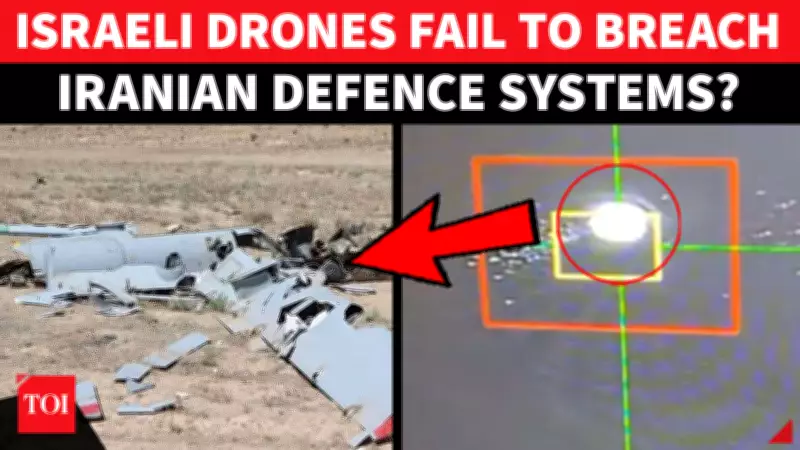
Iran Escalates Conflict with Israel, Claims Major Retaliatory Strikes
In a significant escalation of hostilities, Iran has announced a large-scale military response against Israel, claiming to have shot down two advanced Israeli drones and launched strikes on numerous Israeli targets. The Islamic Revolutionary Guard Corps (IRGC) detailed these actions as retaliation, marking a dramatic increase in regional tensions.
Downing of Israeli Drones Over Iranian Territory
According to Iranian military officials, the IRGC intercepted and neutralized two armed Israeli drones over Iranian airspace. The first incident involved an Israeli Orbiter drone being shot down over Tehran, followed by the downing of a Hermes UAV in Alborz province. Iranian authorities emphasized that both drones were armed and were destroyed before they could execute any strikes, showcasing Iran's enhanced air defense capabilities.
In a related development, Iran also reported intercepting a cruise missile over Qazvin province, further highlighting its expanding defensive measures against aerial threats. These actions underscore Iran's readiness to counter perceived Israeli aggression with immediate and forceful responses.

Massive Retaliatory Strikes on Israeli Targets
The retaliation extended beyond defensive measures, with the IRGC claiming to have launched strikes on 80 Israeli targets across key locations. The affected areas include Tel Aviv's surrounding regions, Rishon LeZion, Ramla, Eilat, Ramat Gan, Bnei Brak, and Holon. This widespread assault represents one of the most extensive Iranian military actions against Israel in recent times, potentially causing significant damage and escalating the conflict to new levels.
Iranian officials framed these strikes as a direct response to Israeli provocations, signaling a shift towards more aggressive tactics in the ongoing geopolitical struggle. The scale of the retaliation suggests a calculated effort to demonstrate Iran's military prowess and deter future Israeli operations.
Regional and Global Implications
This escalation raises serious concerns about regional stability and the potential for broader conflict. The downing of drones and the large-scale strikes could provoke further Israeli countermeasures, leading to a cycle of retaliation that might involve other nations or trigger international diplomatic interventions. The situation underscores the volatile nature of Middle Eastern geopolitics, where longstanding animosities can quickly erupt into open hostilities.
As tensions mount, global observers are closely monitoring developments, wary of the risks of escalation that could impact oil markets, security alliances, and peace efforts in the region. The international community may face increased pressure to mediate or de-escalate the conflict to prevent a wider war.