Iran Announces Fattah-2 Hypersonic Missile Deployment in Regional War
Iran has asserted the deployment of its Fattah-2 hypersonic missile during an intensifying confrontation with the United States and Israel. This development, if verified, marks the first operational use of the Fattah-2, which is characterized as a substantially enhanced successor to Iran's earlier Fattah ballistic missile system. The announcement comes amid heightened military activities in the Middle East, raising significant concerns about regional stability and defense capabilities.
Unverified Videos and Strategic Strikes
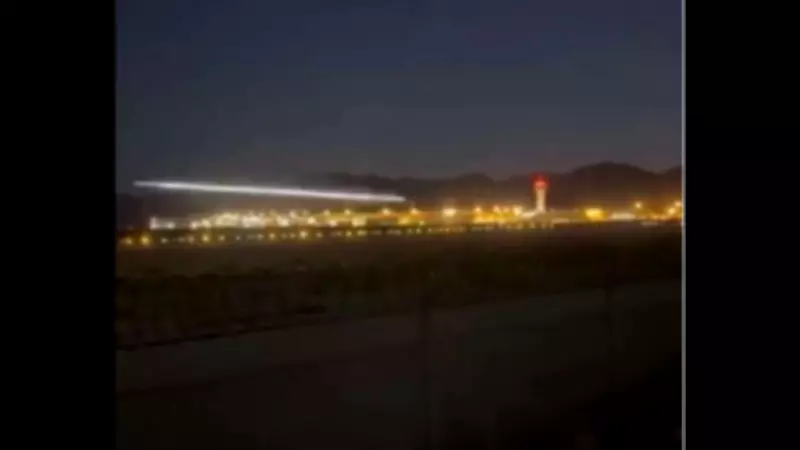
Social media platforms have circulated videos purportedly showing the Fattah-2 missile in action, though these remain unconfirmed by independent sources. According to analysis from Military Watch magazine, Iran may have employed missiles such as the Fattah-1 and Fattah-2 to target high-value objectives. These strikes have notably escalated following the death of Iran's supreme leader, Ayatollah Ali Khamenei, whose compound was reportedly hit on the initial day of the conflict, underscoring the strategic nature of the operations.
Technical Specifications of the Fattah-2 Missile
The Fattah-2 was first revealed in November 2023 by the elite Islamic Revolutionary Guard Corps. It is engineered to utilize a hypersonic glide vehicle instead of a traditional ballistic missile reentry vehicle. This advanced design enables the missile to maneuver in both pitch and yaw directions, sustain significantly higher reentry velocities, and approach targets from unpredictable angles, complicating interception efforts.

Iranian authorities claim that the Fattah-2 can achieve speeds up to Mach 15 and strike targets at distances extending to 1,400 kilometers. While analysts have expressed doubts regarding these assertions, a missile traveling at such hypersonic speeds would theoretically possess the capability to evade conventional missile defense systems. Additionally, reports indicate that the hypersonic missile is equipped with a substantial 200-kilogram warhead, enhancing its destructive potential.
Conflict Expansion to Gulf States
In a broader escalation, Tehran has initiated retaliatory strikes against Gulf states that host United States military installations. These attacks involve extensive barrages of missiles, drones, and other weaponry aimed at American facilities in the United Arab Emirates, Bahrain, Kuwait, and Qatar. The targeted sites include US embassies and military bases, such as fleet headquarters, prompting Gulf air defense systems to engage and intercept hundreds of incoming projectiles.
Despite these defensive measures, some explosions and falling debris have impacted civilian infrastructure, resulting in casualties in affected regions. This spillover of conflict into Gulf territories highlights the widening scope of hostilities and the risks to civilian populations amidst the ongoing military engagements.
Strategic Implications and Regional Dynamics
The deployment of the Fattah-2 hypersonic missile represents a significant advancement in Iran's military capabilities, potentially altering the strategic balance in the Middle East. The ability to deploy such high-speed, maneuverable weapons could challenge existing defense architectures and influence future conflict scenarios. As tensions continue to mount, the international community closely monitors developments, assessing the implications for regional security and global stability.