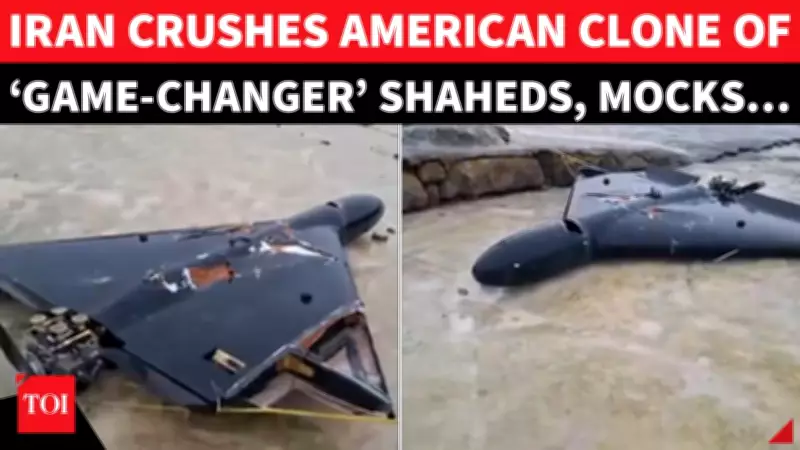
Iran Claims Destruction of US 'Clone' Drone, Releases Video Evidence
In a significant development in ongoing regional tensions, Iran has made a bold claim regarding the destruction of an American unmanned aerial vehicle. The Islamic Revolutionary Guard Corps (IRGC) has asserted that its forces successfully shot down a U.S.-manufactured LUCAS drone, which Iranian officials describe as a direct clone of Tehran's own Shahed-136 loitering munitions.
Video Evidence Presented by Iranian Media
The IRGC-linked Fars News Agency has released compelling video footage that purportedly shows the aftermath of the drone's destruction. The visuals display scattered debris across a ground location, which Iranian authorities insist originates from the downed LUCAS aircraft. This visual proof represents Iran's attempt to substantiate their military claim amid escalating geopolitical friction.
Understanding the LUCAS Drone System
The LUCAS, an acronym for Low-Cost Unmanned Combat Attack System, represents a newer generation of military drone technology developed for the United States military. This system is specifically engineered for autonomous strike missions with enhanced operational flexibility. Key characteristics include:

- Long-range operational capabilities
- Cost-effective manufacturing and deployment
- Multiple launch method options
- Designed for precision attack missions
Iranian military analysts have drawn direct parallels between the LUCAS system and their domestically produced Shahed-136 drones, suggesting technological imitation or adaptation by American defense contractors.
Geopolitical Context and Regional Implications
This incident occurs against a backdrop of heightened military activity and diplomatic strain in the Middle East. The Iranian claim of destroying what they term a "clone" drone adds another layer to the complex technological and strategic competition between Tehran and Washington. Military experts note that such incidents typically reflect broader power dynamics and technological rivalry in the region.
The public release of video evidence through state-affiliated media channels represents a deliberate communication strategy by Iranian authorities. This approach serves multiple purposes: demonstrating military capability to domestic audiences, sending a message to international adversaries, and potentially influencing diplomatic negotiations through shows of strength.
As verification of the incident's details remains subject to international scrutiny, the broader implications for regional security and U.S.-Iran relations continue to unfold. The technological aspect of drone development and counter-drone capabilities has become increasingly central to modern asymmetric warfare strategies in conflict zones worldwide.