

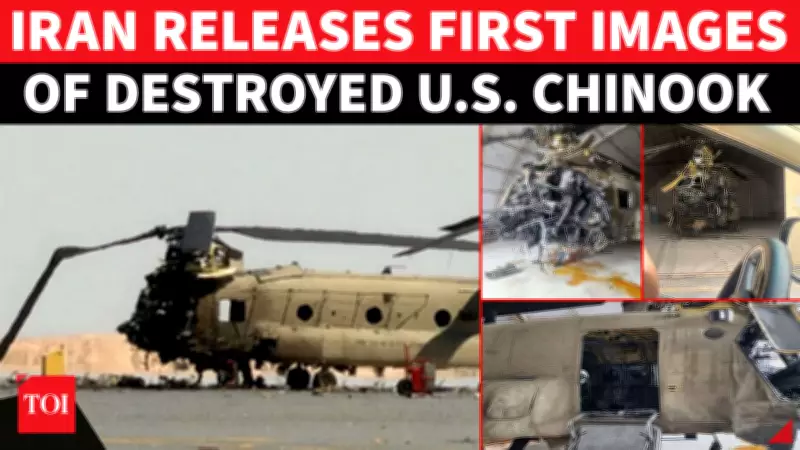
Iranian Media Publishes Images of Alleged U.S. Helicopter Destruction
Iranian state media has dropped what it claims are bombshell images showing a severely damaged United States CH-47 Chinook helicopter following what it describes as a direct drone strike. The unverified photographs, released on April 4, 2026, purport to show the aftermath of an attack on the heavy-lift transport aircraft in Kuwait.
Details of the Alleged Attack and Military Context
According to reports from Iranian sources, the CH-47 Chinook was allegedly hit as part of a mission connected to a downed U.S. F-15E Strike Eagle inside Iranian territory. The sequence of events suggests a retaliatory or escalatory action in the ongoing conflict between the two nations. Military analysts note that the Chinook is a critical asset for troop transport and logistics, making such a strike significant if confirmed.
Search and rescue operations are currently underway, with one crew member reportedly rescued while another remains missing. The uncertainty surrounding the fate of the personnel adds a human dimension to the geopolitical tensions.

Official Responses and Escalating Tensions
The Pentagon has not yet confirmed the claims made by Iranian media, maintaining its standard protocol of verifying such incidents before issuing official statements. This lack of confirmation leaves room for skepticism but also underscores the volatile nature of the situation.
In a stark development, U.S. President Donald Trump has publicly labeled the situation as "war," signaling no intention to de-escalate hostilities. His statement marks a clear and dangerous shift in rhetoric, potentially paving the way for further military engagements.
Broader Implications for Iran-U.S. Relations
This incident represents a significant escalation in the long-standing Iran-U.S. conflict, which has seen numerous skirmishes and diplomatic standoffs. The release of these images by Iranian state media appears to be a strategic move, possibly aimed at demonstrating capability and resolve to both domestic and international audiences.
The geopolitical landscape in the Middle East remains highly unstable, with such events threatening to draw in regional actors and exacerbate existing conflicts. Observers warn that without immediate diplomatic intervention, the situation could spiral into a larger confrontation.
As the world watches closely, the focus remains on verifying the facts, ensuring the safety of military personnel, and exploring avenues for de-escalation. The coming days will be critical in determining whether this incident leads to a temporary spike in tensions or a permanent shift in the conflict dynamics.






