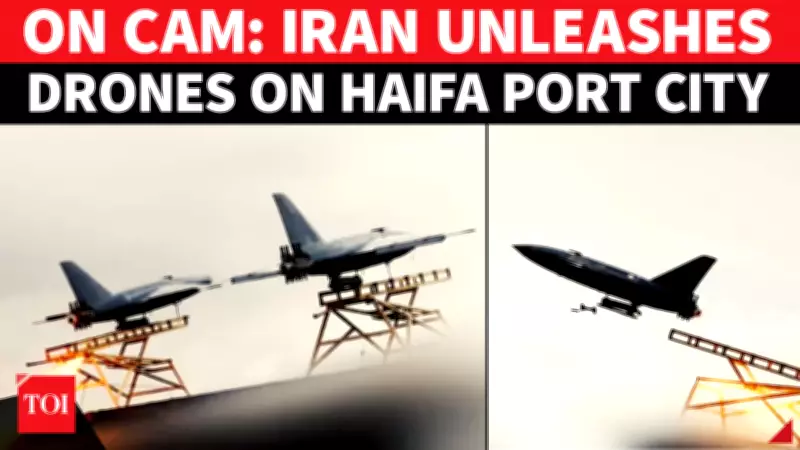
Iran Announces Drone Strike on Israeli Energy Hub in Haifa
The Iranian Army has declared that its Air Force conducted a targeted drone operation against key Israeli energy infrastructure in the northern city of Haifa. According to official statements, the attack was aimed at an oil and gas refinery along with associated fuel storage facilities, which Iran claims are operated by what it terms the "Israeli regime."
Retaliation for Alleged Aggression Against Iranian Oil Reserves
In its twentieth official communiqué, the Islamic Republic of Iran Army stated that this military action was a direct response to what it described as aggression targeting Iran's vital oil reserves. The announcement was disseminated through Iran's Mehr News Agency, highlighting the government's stance on the ongoing regional tensions.
However, critical details regarding the operation's outcome remain unverified. Iranian authorities have not presented any concrete evidence to substantiate claims of a successful strike on the Haifa refinery. Similarly, there has been no immediate confirmation or denial from Israeli officials concerning the alleged attack.

Unconfirmed Success and Absence of Israeli Response
The lack of confirmation from both sides adds a layer of uncertainty to the situation. Israel has maintained silence, refraining from issuing any public statement addressing Iran's assertions. This absence of official commentary leaves the actual impact and validity of the drone strike in question.
International observers are closely monitoring developments, as such incidents have the potential to escalate hostilities in a region already fraught with geopolitical strife. The targeting of energy infrastructure, particularly refineries, underscores the strategic dimensions of the conflict, where economic and military interests intersect.
Background of Rising Tensions
This reported attack occurs against a backdrop of heightened animosity between Iran and Israel, with both nations frequently accusing each other of covert operations and acts of aggression. Previous incidents have included cyberattacks, assassinations, and military skirmishes, often linked to broader proxy conflicts across the Middle East.
The use of Arash-2 drones, as claimed by Iran, points to advancements in unmanned aerial capabilities being leveraged in modern warfare. Such technologies enable long-range strikes with reduced risk to personnel, changing the dynamics of military engagements in the region.
As the situation unfolds, the international community awaits further clarity. The absence of verified proof and official responses means that the full scope and consequences of this alleged drone attack on Haifa's energy hub remain to be seen, potentially influencing future diplomatic and military strategies in the ongoing Iran-Israel rivalry.