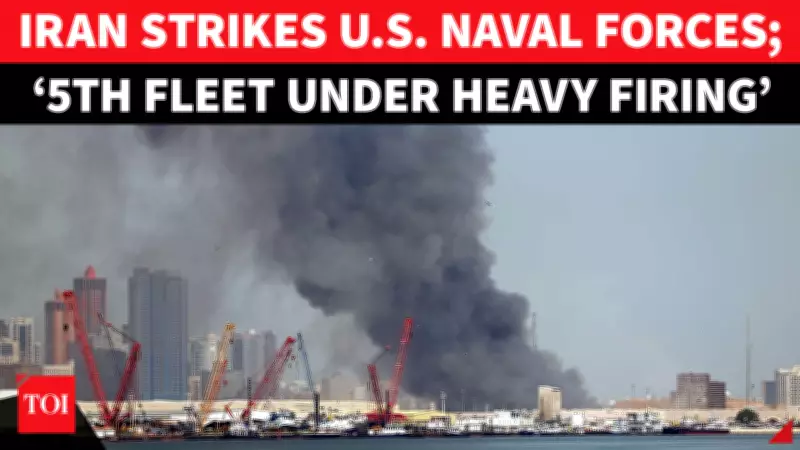
A major escalation is unfolding in the Persian Gulf after Iran's Islamic Revolutionary Guard Corps (IRGC) claimed it launched a drone attack against the headquarters of the U.S. Fifth Fleet in Bahrain. The claim comes in response to reported U.S. strikes on targets in southern Iran, including areas near the strategic Strait of Hormuz.
Details of the Attack
The IRGC stated that the drone strike targeted the U.S. Fifth Fleet headquarters in Bahrain, which is one of Washington's most critical military assets in the Middle East. The Fifth Fleet oversees naval operations across the Persian Gulf, Arabian Sea, Red Sea, and the Strait of Hormuz—one of the world's most important energy chokepoints. According to Iranian sources, the attack was carried out using advanced drones capable of evading radar detection.
Iran's Warning
Following the attack, Iran warned that America's military presence in the region is in its crosshairs and threatened a "more severe response" if U.S. military operations continue. The IRGC issued a statement saying, "The Islamic Republic of Iran will not hesitate to defend its sovereignty and will respond with crushing force to any further aggression."

Context and Background
The attack comes amid heightened tensions between Iran and the United States. Earlier this week, the U.S. conducted airstrikes on Iranian targets in southern Iran, reportedly destroying missile sites and drone facilities near the Strait of Hormuz. These strikes were described by U.S. officials as a "revenge operation" for previous attacks on American assets in the region. Iran has condemned the U.S. strikes as a violation of international law and has vowed to retaliate.
Global Implications
The Strait of Hormuz is a vital waterway through which about 20% of the world's oil passes. Any disruption to shipping in the strait could have severe consequences for global energy markets. The U.S. Fifth Fleet's presence in Bahrain is designed to ensure freedom of navigation in the region. This attack marks a significant escalation in the conflict, raising fears of a broader war in the Middle East.
International reactions have been swift. The United Nations called for an immediate de-escalation, while several European countries urged restraint. Meanwhile, Iran's allies in the region, including Hezbollah and various Iraqi militias, have expressed support for Iran's actions.
The situation remains fluid, with both sides signaling a readiness for further military action. Analysts warn that the region is on the brink of a major conflict that could draw in other powers and destabilize the entire Middle East.