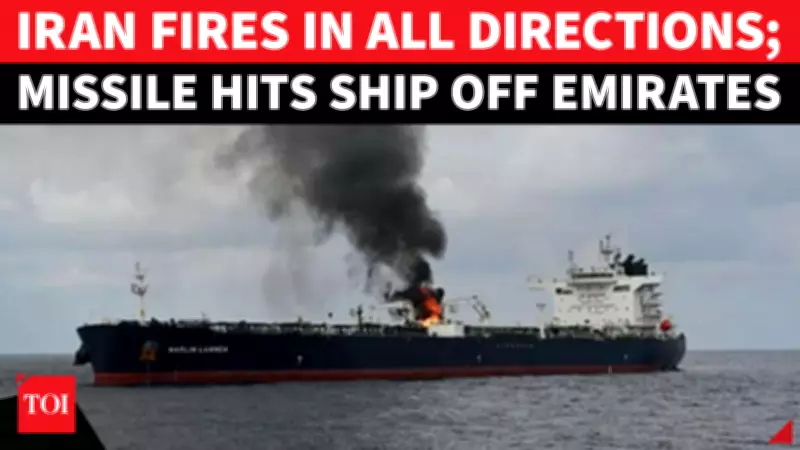
Iran Escalates Maritime Conflict with Ship Attack Near UAE
Tensions in the Middle East have surged dramatically as Iran launched an attack on a commercial vessel near the United Arab Emirates, while the Islamic Revolutionary Guard Corps (IRGC) simultaneously targeted oil and gas facilities in three nations. This aggressive move signals a dangerous expansion of the regional conflict into critical global shipping lanes, raising alarms over potential disruptions to world energy supplies.
Ship Struck by Projectile Off Khawr Fakkan
The maritime incident occurred just 11 nautical miles off the coast of Khawr Fakkan in the UAE, where an unknown projectile struck a vessel, igniting a fire onboard. The United Kingdom Maritime Trade Operations (UKMTO) has issued an urgent warning, advising all ships in the area to remain on high alert due to the heightened threat. This attack comes in the wake of Iran's recent vow to choke oil flows through the Strait of Hormuz, a strategic chokepoint through which nearly 20% of the world's oil passes.
IRGC Targets Energy Infrastructure in Multiple Countries
In a coordinated escalation, the IRGC has reportedly burned oil and gas facilities in three nations, though specific locations were not disclosed in initial reports. This action appears to be retaliation for strikes on Iran's South Pars gas field, one of the largest natural gas fields globally. The targeting of energy infrastructure underscores Iran's strategy to leverage its regional influence and disrupt economic stability.

Key developments include:
- More than 20 vessels have been targeted since the conflict intensified, indicating a shift from land and air battles to maritime warfare.
- No group has claimed responsibility for the ship attack, fueling fears that the Gulf could become a new flashpoint in the widening Iran-Israel conflict.
- The global community is closely monitoring the situation, as any disruption to the Strait of Hormuz could have massive consequences for oil prices and international trade.
Broader Implications for Global Security and Economy
The escalation poses significant risks to global security and the economy. The Strait of Hormuz is a vital corridor for oil tankers, and any sustained conflict in the region could lead to:
- Increased insurance costs for shipping companies.
- Potential supply chain disruptions affecting energy markets worldwide.
- Heightened geopolitical tensions involving major powers like the United States and its allies.
As the situation unfolds, analysts warn that the Middle East conflict is spilling over into maritime domains, with the potential to trigger a broader regional war. The international community is urged to engage in diplomatic efforts to de-escalate tensions and safeguard global shipping routes.