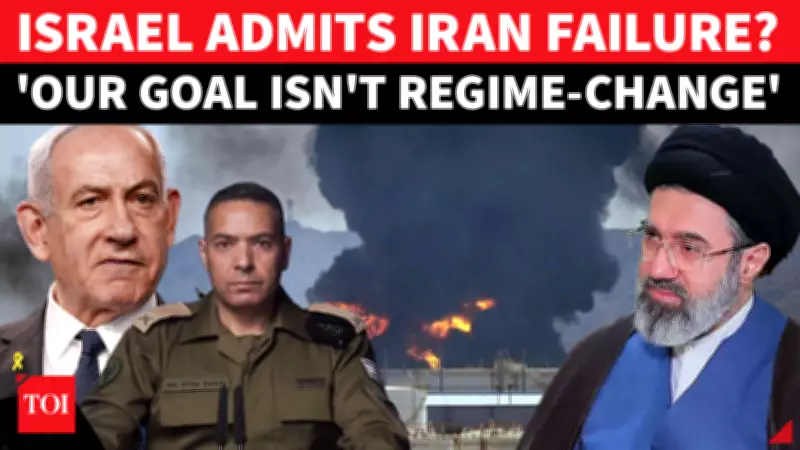
IDF's Major Admission in Iran Conflict: No Aim to Overthrow Regime
In a significant development amid the ongoing Middle East war, the Israel Defense Forces (IDF) have made a substantial admission regarding their military objectives in Iran. According to a statement from military spokesperson Effie Defrin, Israeli forces have successfully struck more than 700 missile array targets across Iran, severely degrading a large portion of Tehran's ballistic missile launch capabilities.
Strategic Focus on Military Infrastructure
Defrin emphasized that the IDF's operations are concentrated on targeting infrastructure directly linked to Iran's nuclear program and its extensive missile network. This targeted approach aims to neutralize immediate threats while avoiding broader political ambitions. The spokesperson clarified that, at this stage, toppling the Iranian regime is not a current military objective for Israel.
This announcement underscores the scale and precision of Israel's ongoing campaign against Iran. It highlights a strategic shift where military actions are focused on specific security threats rather than regime change, which could have far-reaching geopolitical implications.

Potential for Escalation as Thousands of Targets Remain
The IDF's statement also revealed that thousands of additional targets inside Iran are still under consideration for potential strikes. This indicates that the conflict could intensify further in the coming days or weeks, as Israel continues to assess and possibly act on these remaining threats.
The admission that regime change is not a goal may be seen as a tactical move to limit the scope of the war and manage international perceptions. However, the ongoing strikes on critical infrastructure suggest that Israel is committed to a prolonged military engagement aimed at crippling Iran's offensive capabilities.
Implications for Regional Stability
This development comes amid heightened tensions in the Middle East, with Iran previously issuing challenges to the United States and Israel. The IDF's focus on missile and nuclear targets, rather than political overthrow, could influence the dynamics of the conflict, potentially affecting diplomatic efforts and regional alliances.
As the situation evolves, the world watches closely to see how this strategic admission will impact the trajectory of the war and the broader geopolitical landscape in the Middle East.