

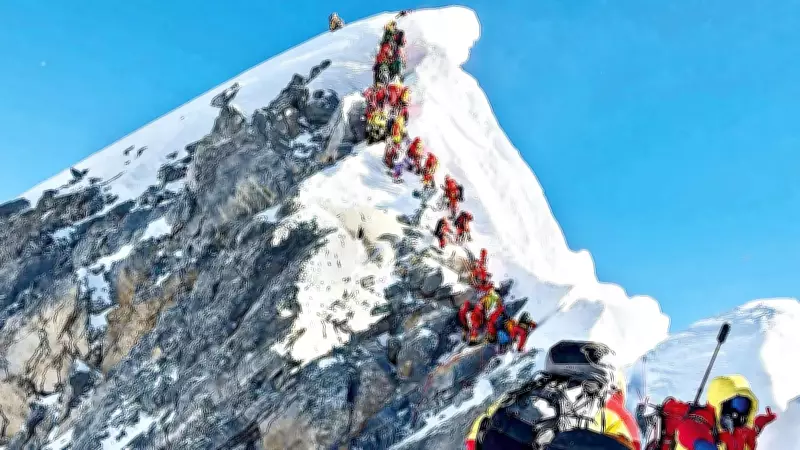
Mount Everest's most revealing modern image is no longer the solitary climber above the clouds. It is the queue: dozens, sometimes hundreds, of climbers in bright down suits clipped to the same rope, waiting near the top of the world for a few seconds of private triumph on a mountain that has become increasingly public.
The Rise of Luxury Expeditions
In recent years, the number of climbers attempting to summit Everest has surged dramatically. This is largely due to the proliferation of luxury camps and professionally managed expeditions that offer a more accessible route to the peak. These services provide high-end amenities, experienced guides, and logistical support, making the climb seem less daunting to amateur adventurers. However, this influx has led to overcrowding on the mountain, particularly in the narrow passages near the summit.
Impact on Safety and Fatalities
The queues on Everest have become a deadly bottleneck. Climbers are forced to wait for hours in the 'death zone'—altitudes above 8,000 meters where oxygen levels are critically low. These delays increase the risk of exhaustion, frostbite, and altitude sickness. Fatalities have become more common, with several deaths reported in recent seasons directly attributed to the long waits. Despite these dangers, the allure of summiting the world's highest peak continues to attract record numbers.

Accepted Part of the Climb
Remarkably, delays and fatalities are now considered an accepted part of the Everest experience. Many climbers acknowledge the risks but are willing to take them for the chance to stand on top of the world. Expedition companies have also adapted, incorporating contingency plans for long waits. However, critics argue that the commercialization of Everest has compromised safety and turned the mountain into a crowded tourist attraction.
The Future of Everest Climbing
Authorities and mountaineering organizations are exploring measures to manage the crowds, such as limiting permits, enforcing stricter fitness requirements, and improving route management. Yet, with demand showing no signs of slowing, the image of a gridlocked Everest may persist. For now, the queue near the summit remains a stark symbol of the mountain's transformation from a remote challenge to a congested destination.






