

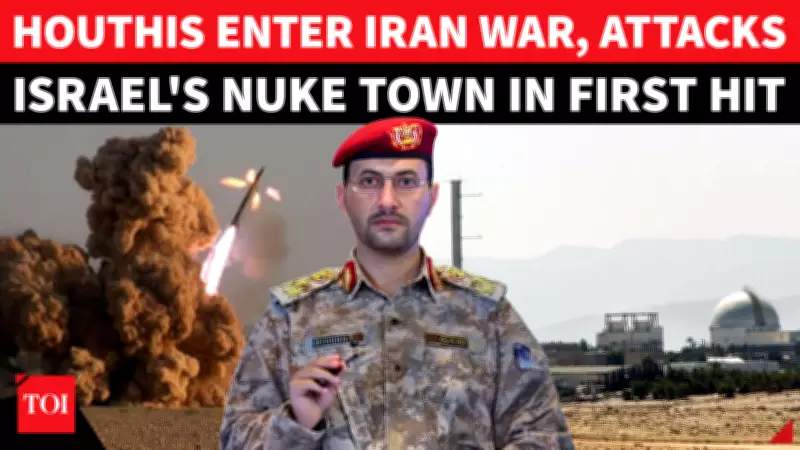
Houthi Rebels Escalate Regional Conflict with Missile Attack on Israel
In a significant escalation of Middle East hostilities, Yemen's Houthi movement has officially entered the expanding Iran-U.S.-Israel conflict by launching a missile toward Israeli territory. The attack triggered air defense systems and emergency alerts in the vicinity of Israel's sensitive Dimona nuclear facility, marking the group's first direct military engagement in the ongoing regional confrontation.
Targeting Critical Infrastructure
The missile launch followed explicit threats from Houthi spokesperson Yahya Saree, who had previously warned of retaliatory actions against Israeli targets. While Israeli authorities have not officially confirmed the Houthis as the perpetrators, the timing and nature of the strike strongly align with the group's declared intentions to support Iran in its conflict with Israel and the United States.
The International Atomic Energy Agency has confirmed that the Dimona nuclear site sustained no damage and there is no radiation risk to the surrounding area. However, the UN nuclear watchdog has urgently called for maximum restraint around all nuclear facilities, emphasizing the catastrophic consequences that could result from any accidental or intentional compromise of nuclear security.

Widening Battlefield
This development represents a dangerous expansion of the conflict beyond traditional front lines, with Iran-linked proxy groups now actively participating in hostilities that were previously confined to state actors. The Houthi intervention signals a strategic shift in regional warfare, where non-state actors are increasingly capable of projecting force across significant distances.
The missile strike near Dimona occurred against a backdrop of intensifying regional tensions, with multiple Iran-aligned groups demonstrating enhanced coordination and military capabilities. This expansion of the battlefield raises serious concerns about the conflict's potential to engulf the entire Middle East in a broader war.
International Concerns and Regional Implications
Security analysts warn that the Houthi involvement creates new complications for conflict resolution efforts, as it introduces additional actors with different agendas and capabilities. The group's demonstrated ability to launch long-range attacks against Israeli territory suggests they have acquired or developed more sophisticated weaponry than previously assessed.
The incident has prompted renewed diplomatic efforts to contain the conflict, with international mediators expressing particular concern about the targeting of nuclear facilities. As more regional players join the confrontation, the risk of miscalculation and unintended escalation continues to grow exponentially.
Regional powers are now reassessing their security postures in light of the Houthi missile strike, with neighboring countries potentially facing increased threats from similar proxy actions. The expansion of the conflict to include non-state actors operating from distant territories represents a new dimension in Middle Eastern warfare that could have lasting implications for regional stability.






