

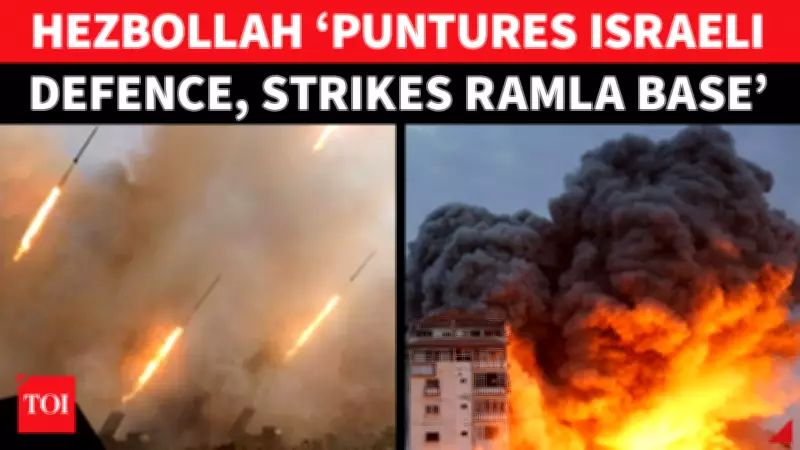
Hezbollah Releases Video of Attack on Ramla Base Near Tel Aviv; Israel Sounds High Alert
In a significant escalation of regional hostilities, Hezbollah has released dramatic video footage claiming a missile strike on the Israeli army's Ramla base, located near Tel Aviv. The footage, which shows advanced missiles being launched, has prompted Israel to declare a high alert across the country, particularly in the Tel Aviv area.
Details of the Attack and Footage
The video released by Hezbollah depicts what appears to be a coordinated missile assault on the Ramla base, a key military installation in central Israel. The footage highlights the use of sophisticated weaponry, suggesting that Hezbollah may have access to more advanced capabilities than previously estimated by analysts. This attack comes amid heightened tensions linked to Iran, Hezbollah's primary backer, which has been involved in ongoing proxy conflicts in the region.
Israeli authorities have confirmed the incident and are assessing the damage, though specific details on casualties or infrastructure impact remain undisclosed. The release of the video is seen as a psychological tactic by Hezbollah to demonstrate its reach and resilience, despite previous wars that were believed to have degraded its operational strength.

Implications for Israel and Regional Security
This attack underscores a renewed threat to Tel Aviv, Israel's economic and cultural heart, which has historically been a target in conflicts with militant groups. The proximity of the Ramla base to Tel Aviv raises concerns about the vulnerability of urban centers to deep strikes, challenging Israel's defense strategies. Analysts note that Hezbollah's ability to launch such attacks suggests it has rebuilt or maintained its missile arsenal, potentially with Iranian support, complicating regional security dynamics.
Israel's high alert status involves increased military patrols, enhanced surveillance, and public safety advisories, as the government prepares for possible further escalations. This incident adds to a series of recent provocations in the Middle East, highlighting the fragile state of peace and the ongoing risk of broader conflict involving state and non-state actors.
Historical Context and Future Outlook
Hezbollah, a Lebanon-based militant group, has been engaged in periodic conflicts with Israel, with the last major war occurring in 2006. Since then, many experts assumed Hezbollah's capabilities were limited due to losses and international pressure. However, this latest attack indicates that the group may have adapted and strengthened its offensive posture, leveraging Iran's support to project power into Israeli territory.
Looking ahead, the situation remains volatile, with potential for retaliatory strikes from Israel and further involvement from Iran. Diplomatic efforts to de-escalate tensions are likely to be challenged by such incidents, as both sides assess their next moves in a complex geopolitical landscape. The international community is closely monitoring developments, given the risk of spillover effects in an already unstable region.






