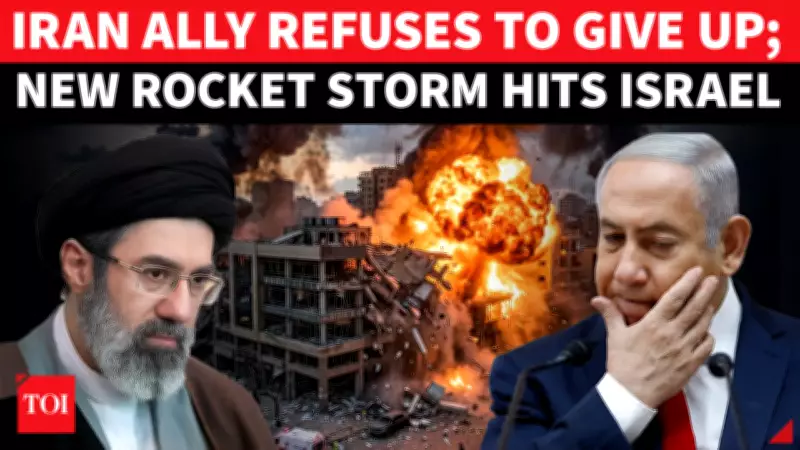
Hezbollah Rocket Barrage Targets Northern Israel as IDF Intensifies Lebanon Strikes
Cross-border hostilities between Israel and Hezbollah have escalated dramatically, with a fresh wave of rocket attacks from southern Lebanon prompting immediate Israeli airstrikes deep into Lebanese territory. The Israel Defence Forces confirmed that four rockets were fired toward the Karmiel area in northern Israel, marking a significant uptick in regional tensions.
Details of the Rocket Attack and Israeli Response
According to military reports, two of the incoming rockets were successfully intercepted by Israel's advanced air defence systems. The remaining projectiles landed harmlessly in open areas, with authorities confirming no immediate casualties or significant damage. Hezbollah, in a statement, claimed responsibility for what it described as a coordinated series of strikes targeting multiple Israeli positions along the northern front.
The militant group specifically named Misgav Am, Kfar Giladi, and the Zarit barracks as primary targets in this operation. In response, the IDF launched a swift and forceful counterattack, deploying air power to strike several locations across southern Lebanon. The targeted areas included Nabatieh al-Fawqa, al-Abbassieh, and Bint Jbeil—regions that have faced repeated bombardment in recent days as part of Israel's ongoing campaign against Hezbollah infrastructure.

Escalating Conflict and Strategic Implications
This latest exchange underscores the volatile nature of the Israel-Lebanon border, which has seen periodic flare-ups since the 2006 war. Israeli officials have consistently framed their military operations as necessary measures to dismantle Hezbollah's launch sites and command structures, which they argue pose an existential threat to northern Israeli communities.
The timing of this escalation is particularly noteworthy, coming amid broader regional instability and heightened geopolitical tensions involving Iran and other actors. Analysts suggest that Hezbollah's rocket capabilities have evolved significantly, allowing the group to launch more sophisticated and coordinated attacks than in previous years.
Meanwhile, residents in northern Israel and southern Lebanon continue to face the daily reality of sirens, shelters, and the constant threat of violence. Humanitarian organizations have expressed concern about the potential for civilian casualties and displacement should the conflict intensify further.
Regional Context and Future Outlook
The cross-border fire follows a pattern of tit-for-tat strikes that have characterized the Israel-Hezbollah conflict for decades. However, the current phase appears marked by increased frequency and intensity, raising fears of a broader confrontation. International observers are closely monitoring the situation, with calls for restraint from various diplomatic quarters.
Military experts note that Israel's targeted strikes on Hezbollah positions are part of a broader strategy to degrade the group's military capabilities while avoiding all-out war. Conversely, Hezbollah's rocket attacks serve both tactical and propaganda purposes, demonstrating the organization's reach and resolve to its supporters.
As both sides assess the aftermath of this latest exchange, the risk of miscalculation remains high. The coming days will be critical in determining whether this escalation represents a temporary spike in violence or the beginning of a more sustained and dangerous phase in the long-standing conflict between Israel and Hezbollah.