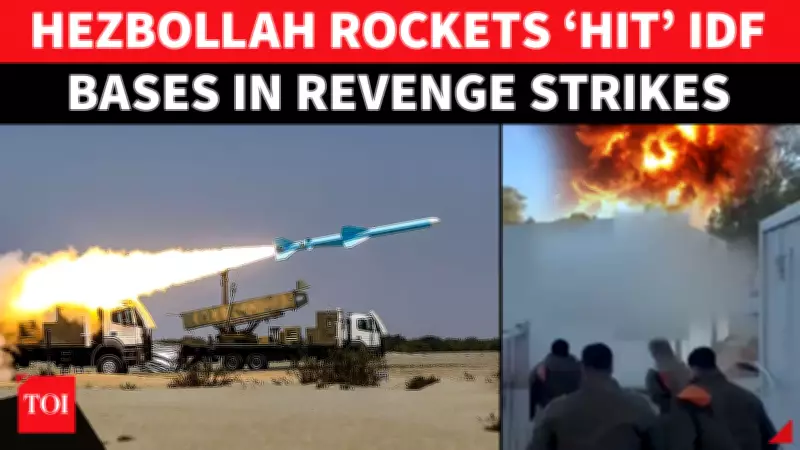
Hezbollah Intensifies Attacks with Rockets Striking Deep Inside Israel
The ongoing conflict along the Israel-Lebanon border escalated dramatically as Hezbollah forces unleashed a significant barrage of rocket and artillery fire. The militant group stated these aggressive actions were a direct response to counter Israeli military movements near southern Lebanese border towns. This offensive marks a severe intensification in the regional hostilities, highlighting the volatile nature of the frontier.
Central Israel Targeted in Unprecedented Missile Strikes
In a concerning development, two missiles launched from Lebanon penetrated deep into central Israel, reaching areas far from the typical conflict zone. Alarmingly, these projectiles were not intercepted by Israeli air defense systems, and no warning sirens were activated to alert the civilian population. This failure represents a critical lapse in the country's defensive capabilities during a moment of high tension.
The first missile struck a daycare center in the city of Ramle, resulting in injuries to 14 individuals, including children and staff. The attack caused panic and significant damage to the facility, underscoring the grave risks to civilian infrastructure. Simultaneously, a second missile hit a satellite communication station located in the Ela Valley near Beit Shemesh. This strike potentially disrupted communication networks and highlighted the strategic targeting of Israeli assets.

Israeli Authorities Acknowledge Defense System Failure
Following the incidents, Israeli officials described the event as an "isolated failure" in their air defense and early warning mechanisms. A comprehensive investigation has been launched to determine the exact reasons behind the malfunction. Experts are scrutinizing why the Iron Dome and other defensive systems did not engage the incoming threats, and why sirens remained silent, leaving citizens vulnerable.
This failure has raised serious questions about the reliability of Israel's much-vaunted air defense infrastructure during simultaneous attacks. The investigation aims to identify technical glitches, procedural errors, or intelligence shortcomings that contributed to this breach. The findings could lead to significant upgrades in defense protocols to prevent future occurrences.
Regional Implications and Escalating Tensions
The successful penetration of missiles into central Israel signals a potential shift in Hezbollah's tactical capabilities, allowing them to strike with greater range and precision. This escalation threatens to widen the conflict beyond the border regions, drawing in more populated areas and increasing the risk of broader regional instability.
As hostilities continue, the international community is closely monitoring the situation, concerned about further escalation and its impact on regional security. The incident underscores the fragile nature of the ceasefire and the ongoing threat posed by militant groups in the area.