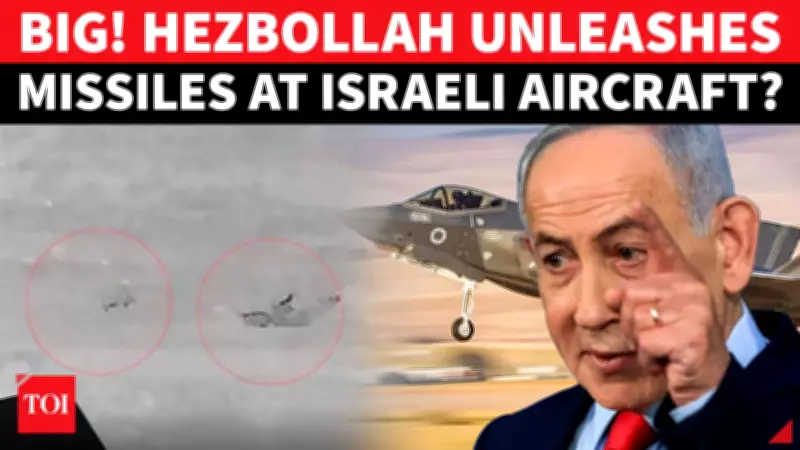
Hezbollah Claims Missile Strikes Forced Israeli Retreat in Lebanon Conflict
Hezbollah has significantly escalated its military operations against Israeli forces in South Lebanon, launching a series of coordinated attacks that have targeted key assets and forced tactical retreats. The group asserts that its advanced missile systems have compelled Israeli Defense Forces (IDF) units to withdraw from certain positions, marking a notable development in the ongoing hostilities.
Intensified Attacks on Israeli Military Assets
In recent engagements, Hezbollah fighters have struck Merkava tanks with precision-guided munitions, severely damaging the armored vehicles. Additionally, the group targeted an evacuation helicopter, disrupting medical and logistical operations. In a particularly bold move, Hezbollah deployed surface-to-air missiles, forcing an Israeli fighter jet to abort its mission and retreat from the airspace over Lebanon.
Rocket and drone assaults have also been directed at northern Israeli settlements, including Kiryat Shmona, where residential and infrastructure areas have sustained damage. Hezbollah officials maintain that these locations are legitimate militarized targets due to their strategic use by Israeli forces.

IDF Response and Escalating Tensions
In response to the heightened aggression, the IDF conducted a counter-operation, successfully eliminating a Hezbollah cell responsible for recent rocket fire into Israeli territory. Military spokespersons emphasized the precision and effectiveness of the strike, aiming to degrade Hezbollah's operational capabilities.
The northern front is rapidly heating up, with both sides ramping up their military activities. This escalation has raised significant concerns among international observers about the potential for a broader regional conflict, as neighboring countries and global powers monitor the situation closely.
Broader Regional Implications
The conflict in Lebanon is part of a wider pattern of instability in the Middle East, with related incidents involving Iran and other actors. As Hezbollah and the IDF continue to exchange fire, the risk of miscalculation or further escalation remains high. Diplomatic efforts are underway to de-escalate tensions, but the persistent violence underscores the fragile security environment in the region.
Analysts warn that the ongoing fighting could draw in additional parties, exacerbating humanitarian crises and threatening regional stability. The international community is urged to intervene diplomatically to prevent a full-scale war.