

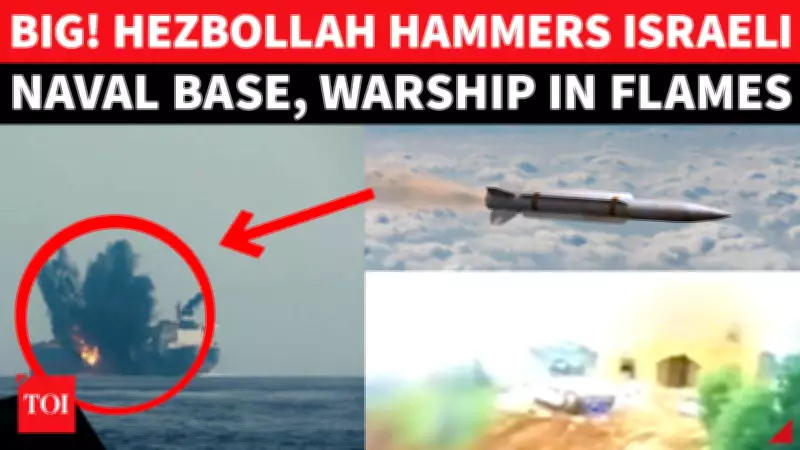
Hezbollah Claims Direct Cruise Missile Strike on Israeli Naval Vessel
In a dramatic escalation of hostilities, the Lebanese militant group Hezbollah has asserted that it successfully targeted an Israeli warship with a cruise missile in the Mediterranean Sea. The attack, described as a direct hit, occurred approximately 68 nautical miles off the coast of Lebanon, according to an official statement released by the group.
Surprise Strike Catches Israeli Forces Off Guard
The operation reportedly took Israeli military and political leadership, including Prime Minister Benjamin Netanyahu, by surprise. Analysts suggest this stealth maritime assault indicates Hezbollah's continued operational capabilities despite previous assessments that the group might be weakened. The timing of the strike is particularly notable, as it occurred just minutes before the Israel Defense Forces (IDF) were set to launch what has been termed a hostile operation, though specific details remain undisclosed.
Details of the Attack and Regional Implications
Hezbollah's statement did not identify the specific class or name of the Israeli warship involved, but described the vessel as a military target. The group claimed the cruise missile strike resulted in significant damage, with reports indicating the ship was set ablaze. This incident is not an isolated event; it follows a pattern of increased military activity and proxy conflicts in the region, involving various state and non-state actors.

Key aspects of this development include:
- Strategic Escalation: The attack represents a bold move by Hezbollah, extending its reach into maritime domains traditionally dominated by state navies.
- Technological Capability: The use of a cruise missile suggests advanced weaponry, possibly acquired through external support, raising concerns about arms proliferation.
- Regional Tensions: This strike adds to the volatile security environment in the Middle East, where conflicts often involve multiple factions and international players.
Broader Context of Ongoing Conflicts
The maritime strike occurs against a backdrop of heightened tensions across the region. Recent months have seen numerous incidents involving Iranian-backed groups, Houthi attacks in the Red Sea, and confrontations between Iranian forces and U.S. commandos. These events collectively point to a complex web of geopolitical rivalries and military engagements that risk broader escalation.
Israeli authorities have yet to issue an official comment on the alleged warship attack. However, historical precedents suggest that such provocations often lead to retaliatory measures, potentially sparking a new cycle of violence. The IDF's planned operation, which was reportedly imminent at the time of the strike, may now be reassessed in light of this development.
Security experts warn that this incident could signal a shift in Hezbollah's tactics, from primarily land-based engagements to more sophisticated naval and aerial operations. The group's ability to target vessels far from shore demonstrates a growing threat to maritime security in the Eastern Mediterranean, a critical route for global trade and energy supplies.






