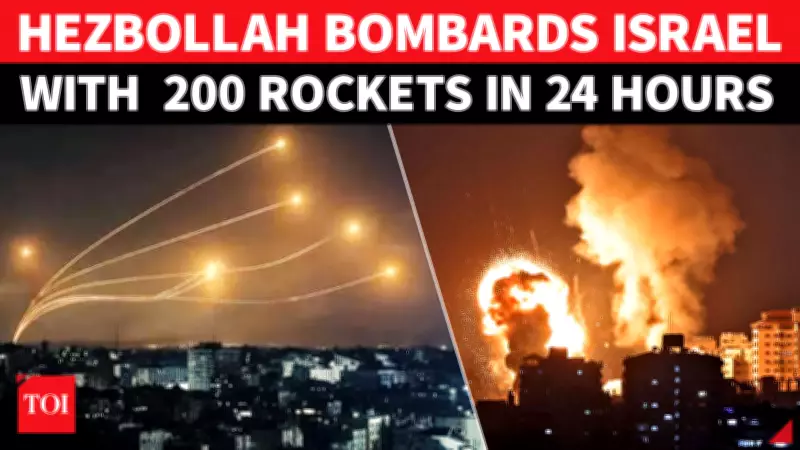
Hezbollah Unleashes Major Rocket Assault on Northern Israel
Tensions have dramatically intensified along Israel's northern border as the Lebanese militant group Hezbollah executed a significant and coordinated offensive. The group launched approximately 200 rockets, missiles, and drones in a widespread attack targeting key Israeli military installations and urban centers. This aggressive move marks a severe escalation in the ongoing regional conflict, raising alarms about potential broader hostilities.
Targeted Strikes on Strategic Israeli Locations
Hezbollah has claimed responsibility for striking multiple critical Israeli bases. According to their statements, the attacks focused on Beit Lid, Glilot near Tel Aviv, and Atlit near Haifa. Additionally, a drone assault was conducted on the Ya'ara Barracks in northern Israel. The group also reported launching drones and rockets toward the city of Nahariya and engaging Israeli troops in southern Lebanon. In a bold assertion, Hezbollah alleged that their operations caused damage to radar systems at the Meron Air Operations Control Base, a vital facility for Israeli air defense coordination.
Israeli Response and Denial of Damage
In response to these claims, Israeli authorities have firmly denied any significant damage to their military facilities. Official statements emphasize that defensive measures were activated, including air raid sirens that sounded across northern regions as rockets approached. Israel maintains that its infrastructure remains operational and secure, despite the scale of the attack. This denial contrasts sharply with Hezbollah's assertions, highlighting the ongoing information warfare accompanying the physical conflict.

The rocket launches triggered widespread alerts, causing disruptions and concern among civilian populations in affected areas. The situation underscores the volatile nature of the Israel-Lebanon border, where skirmishes have periodically flared but rarely at this magnitude. Analysts note that such a large-scale assault could signal a strategic shift by Hezbollah, potentially in coordination with broader regional tensions involving Iran and other actors.
Regional Context and Escalating Tensions
This incident occurs against a backdrop of heightened Middle Eastern instability. Recent events, including Iranian attacks on targets in Dubai and Bahrain, as well as conflicts involving U.S. and Israeli interests, have created a fraught environment. Hezbollah's actions may be linked to these wider geopolitical dynamics, possibly as a show of force or retaliation in the complex web of regional alliances and hostilities.
International observers are closely monitoring the situation, concerned about the potential for further escalation. The targeting of major cities like Haifa and Tel Aviv represents a significant provocation, given their economic and symbolic importance to Israel. Any miscalculation or response could quickly spiral into a larger confrontation, with implications for global security and diplomacy.
As developments unfold, both sides are likely to continue their military posturing and public statements. The coming days will be critical in determining whether this attack leads to a sustained conflict or de-escalation efforts prevail. For now, the region remains on high alert, with civilians and military forces bracing for possible further hostilities.