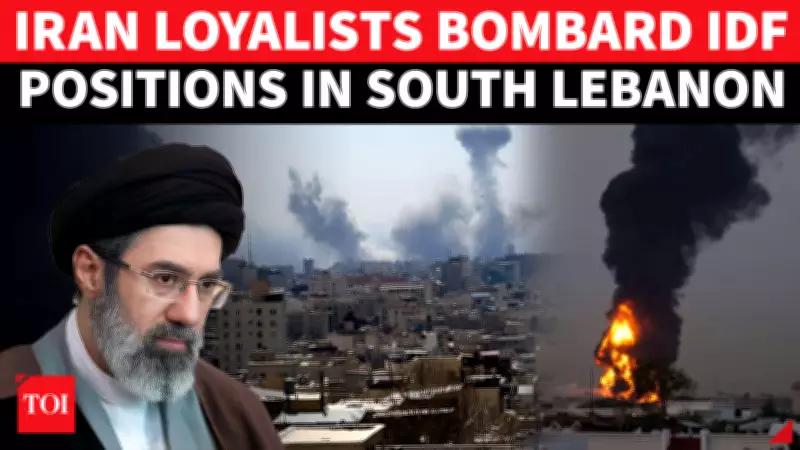
Hezbollah Launches Drone Attack on Israeli Positions in Southern Lebanon
The volatile border between Lebanon and Israel witnessed a significant escalation as Hezbollah, the Lebanese militant group, conducted a targeted drone strike against Israeli artillery positions near the coastal city of Tyre. This aggressive move was explicitly framed by Hezbollah as a direct retaliation for what it described as repeated Israeli violations of the fragile ceasefire agreement that has been in place. The incident underscores the persistent and dangerous friction along this contested frontier, where even minor provocations can rapidly spiral into broader conflict.
IDF Responds: No Casualties Reported After Interception
In response to the attack, the Israel Defense Forces (IDF) issued a statement confirming that their air defense systems successfully intercepted the incoming drone before it could reach its intended target. According to military officials, no casualties or significant damage were reported on the Israeli side. This interception highlights the ongoing technological and tactical arms race in the region, where both state and non-state actors are increasingly leveraging unmanned aerial vehicles for offensive and defensive operations.
The IDF emphasized that their forces remain on high alert and are prepared to respond decisively to any further threats. However, the mere occurrence of such an attack signals a troubling deterioration in the already precarious security environment. Analysts note that while both sides often claim defensive justifications for their actions, these incidents erode the trust necessary to maintain any semblance of stability.

Ceasefire Under Strain: A Border on the Brink
The drone strike is the latest in a series of provocations that have tested the limits of the ceasefire agreement between Israel and Hezbollah. With each side accusing the other of boundary violations and justifying retaliatory strikes, the so-called "balance of deterrence" is becoming increasingly unstable. Military observers warn that the current situation is akin to a powder keg, where a single miscalculation or misstep could trigger a full-scale confrontation, drawing in regional powers and exacerbating the already complex geopolitical landscape.
This incident occurs against a backdrop of heightened tensions across the Middle East, involving other actors such as Iran and the United States. The interplay of these broader conflicts often influences local dynamics, making the Lebanon-Israel border a potential flashpoint for wider regional escalation. The international community has repeatedly called for restraint and dialogue, but diplomatic efforts have so far failed to address the underlying grievances fueling the violence.
Regional Implications and Future Outlook
The attack near Tyre is not an isolated event but part of a pattern of low-intensity warfare that has characterized the Lebanon-Israel border for years. Key factors contributing to the instability include:
- Hezbollah's growing arsenal of drones and precision-guided missiles, supplied by Iran.
- Israel's unwavering policy of preemptive strikes against perceived threats.
- The absence of a comprehensive peace agreement between Lebanon and Israel.
- Ongoing proxy conflicts involving regional powers like Iran and Saudi Arabia.
As both sides continue to test each other's red lines, the risk of a larger conflict looms ever larger. The international community must intensify efforts to mediate and de-escalate, but the path to lasting peace remains fraught with challenges. For now, residents on both sides of the border are left to hope that the ceasefire, however fragile, can hold against the tide of provocation and retaliation.