Hezbollah Unleashes Major Drone and Rocket Assault on Israel Following Failed Diplomacy
Tensions in the Middle East have dramatically escalated as Hezbollah executed a coordinated drone and rocket barrage against Israel, mere hours after U.S.-Iran negotiations collapsed in Islamabad. This aggressive military action represents a significant intensification of hostilities along Israel's volatile northern border.
Drone Penetration and Interception in Northern Israel
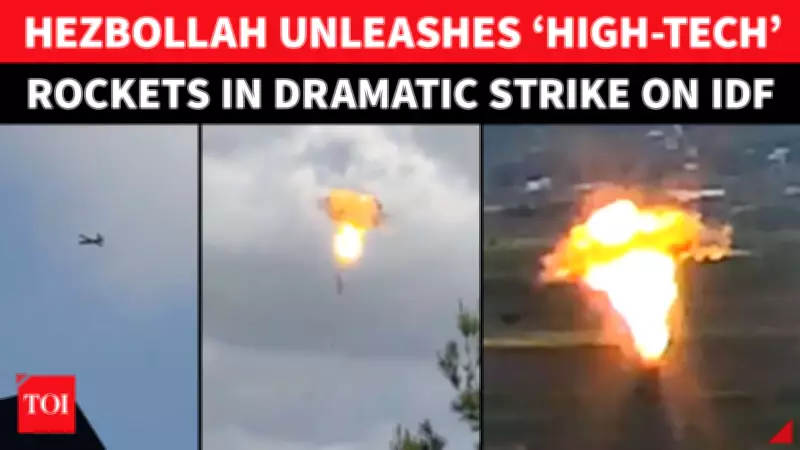
The attack featured advanced drones that penetrated deep into Israeli airspace, reaching the northern city of Kiryat Shmona before being successfully intercepted by Israeli defense systems mid-air. The incident triggered widespread air raid sirens and caused considerable panic among local residents, who were seen running for cover as emergency protocols were activated.
Dramatic visual evidence from the scene shows a powerful explosion lighting up the sky over residential areas, highlighting the immediate threat to civilian populations. The successful interception prevented potential casualties on the ground, but the psychological impact on communities near the Lebanon border remains substantial.

Immediate Israeli Military Response
In retaliation for the Hezbollah assault, Israel Defense Forces launched intensified strikes across southern Lebanon, targeting what they identified as Hezbollah military positions, weapon storage facilities, and command infrastructure. The Israeli counteroffensive appears focused on degrading Hezbollah's operational capabilities and deterring future attacks.
Geopolitical Context: Collapsed US-Iran Negotiations
This military escalation occurs against the backdrop of failed diplomatic efforts between the United States and Iran. The talks in Islamabad, which aimed to address regional tensions including security concerns around the Strait of Hormuz, concluded without agreement, creating a power vacuum that militant groups appear to be exploiting.
The timing suggests Hezbollah may be testing Israeli defenses while international diplomatic channels remain strained. Regional analysts note that such attacks often increase when broader geopolitical negotiations break down, as various actors seek to strengthen their bargaining positions through military demonstrations.
Regional Security Implications
This latest exchange of hostilities raises serious concerns about the potential for broader regional conflict. Key implications include:
- Increased civilian vulnerability in border communities on both sides
- Potential for miscalculation that could trigger wider military engagements
- Strain on international diplomatic efforts to de-escalate Middle East tensions
- Testing of advanced defense systems against evolving drone and rocket technologies
The situation remains fluid, with both sides maintaining high alert status along the border region. Military analysts are closely monitoring whether this represents a temporary spike in violence or the beginning of a more sustained conflict phase.