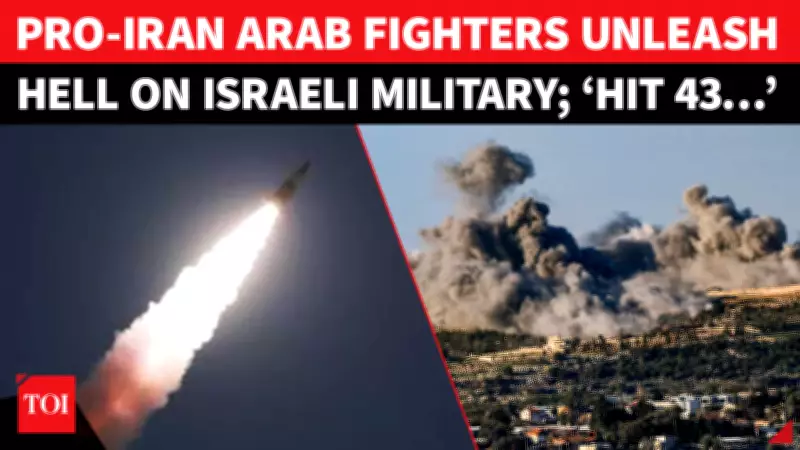
Hezbollah Unleashes Massive Multi-Front Attack on Israeli Military Positions
In a significant escalation of hostilities in the Middle East, the Iran-backed militant group Hezbollah has executed a comprehensive series of coordinated attacks against Israeli military targets. The Lebanon-based organization has claimed responsibility for conducting 43 distinct military operations within a single day, marking one of the most intensive assault campaigns in recent regional conflicts.
Precision Strikes Target Key Israeli Defense Infrastructure
According to Hezbollah statements, the attacks employed sophisticated weaponry including precision-guided drones and missile systems. The Golan Heights region witnessed targeted drone strikes, while direct hits were reported on Merkava tanks and other armored vehicles. The militant group asserts that these operations successfully compromised critical Israeli military infrastructure across multiple strategic locations.
Northern Israeli cities including Kiryat Shmona and Nahariya experienced sustained rocket barrages, forcing civilian populations to seek shelter as projectiles rained down on residential and commercial areas. Simultaneously, explosive drone swarms were deployed against Israeli troop concentrations operating near the volatile Lebanon-Israel border region.

Major Military Installations Come Under Fire
The scope of Hezbollah's offensive extended beyond frontline positions to include attacks on significant Israeli military facilities. The group claims to have struck the Meron air surveillance facility, a crucial component of Israel's aerial defense network. Additionally, underground infrastructure in multiple settlements was reportedly targeted, indicating a coordinated effort to disrupt both surface and subterranean military operations.
Israeli Defense Forces confirmed that two soldiers sustained injuries during the attacks, though the extent of their wounds and their current medical condition remains undisclosed. The IDF has not provided comprehensive details about material damage to military assets or infrastructure resulting from the coordinated strikes.
Regional Tensions Reach New Heights
This unprecedented wave of attacks represents a substantial intensification in the ongoing conflict between Hezbollah and Israel. The militant group's ability to execute 43 coordinated operations across multiple fronts demonstrates significant military capability and strategic planning. The inclusion of drone swarms alongside traditional rocket barrages suggests an evolving tactical approach that combines conventional and emerging warfare technologies.
The timing of these attacks coincides with heightened regional tensions and comes amid broader geopolitical developments involving Iran, the United States, and other regional actors. Security analysts are closely monitoring whether this represents a sustained escalation or a temporary peak in hostilities between the long-standing adversaries.
Israeli military authorities have not yet disclosed their response strategy to these attacks, though historical precedent suggests retaliatory measures are likely. The international community watches with concern as this latest development threatens to further destabilize an already volatile region.