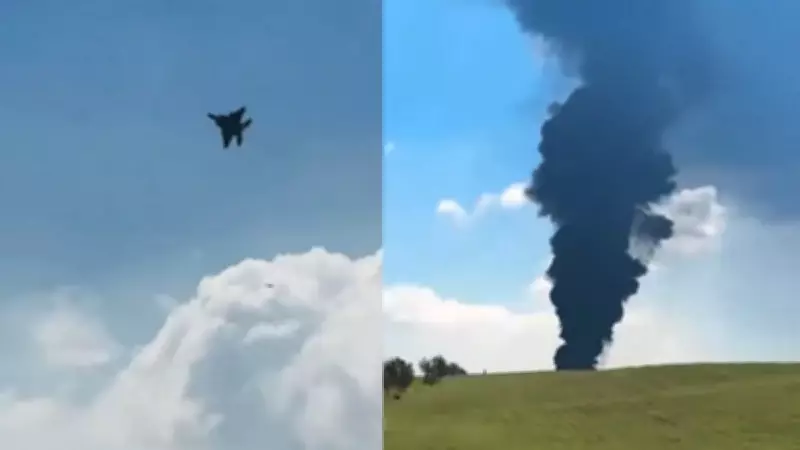
F-15's Failed Intercept of Iranian Shahed Drone Captured in Viral Video
A dramatic video has gone viral, showing a United States Air Force F-15 fighter jet in a high-stakes pursuit of an Iranian-made Shahed drone. The footage, which surfaced online recently, depicts the advanced American aircraft circling two drones in what appears to be a determined attempt to neutralize the threats. This intense aerial encounter ended with visuals of a large explosion, raising questions about the effectiveness of current interception tactics against such unmanned systems.
Details of the Aerial Confrontation
The video, widely shared across social media platforms, provides a rare glimpse into modern combat scenarios involving drones. In the clip, the F-15, a formidable jet known for its speed and agility, is seen maneuvering aggressively around the slower-moving Shahed drones. Observers note that the jet's actions suggest it was trying to target or disable the drones, possibly using its onboard weapons or electronic countermeasures. However, the pursuit ultimately failed to prevent the drones from continuing their flight, culminating in the explosive event shown later in the footage.
This incident underscores the growing challenges faced by military forces in countering drone threats, which are increasingly used in conflicts worldwide. The Shahed drone, produced by Iran, has gained notoriety for its use in various regional conflicts, often deployed for surveillance or attack missions. Its low cost and simplicity make it a persistent hazard, difficult to detect and intercept with conventional fighter jets like the F-15.

Implications for US Defense Strategies
The viral video has sparked discussions among defense analysts and military experts about the adequacy of existing aerial defense systems. While the F-15 is a proven combat aircraft with a long history of success, its failure in this intercept highlights potential vulnerabilities when engaging small, agile drones. This could prompt a reevaluation of tactics and technologies used by the US and allied forces to address such asymmetric threats.
Key points from the incident include:
- The visual evidence of an F-15's struggle against drone targets, which may influence future training and procurement decisions.
- The role of social media in disseminating sensitive military footage, impacting public perception and operational security.
- Iran's continued development and export of drone technology, contributing to global security concerns.
As drone warfare evolves, this event serves as a stark reminder of the need for adaptive defense measures. The US military has been investing in counter-drone systems, but this viral video illustrates that real-world engagements can present unforeseen difficulties. Moving forward, enhanced coordination between air defense assets and the integration of new technologies may be crucial to improving interception rates.