Donetsk Deadlock: The Core Impasse in Ukraine-Russia Peace Negotiations
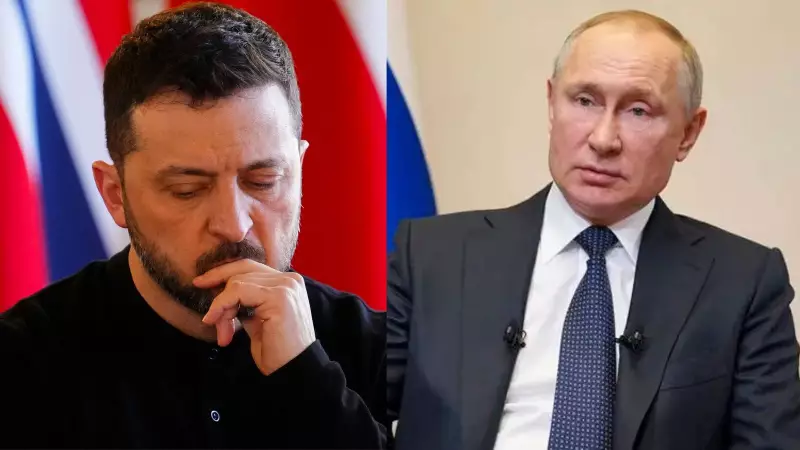
The protracted conflict between Ukraine and Russia continues to hinge on the unresolved fate of the Donetsk region, a critical sticking point that has thwarted multiple diplomatic efforts. Ukrainian President Volodymyr Zelenskiy recently highlighted that this issue, central to the broader Donbas region in eastern Ukraine, would be a focal point at U.S.-brokered trilateral talks held in Abu Dhabi on Friday and Saturday. Despite these high-level discussions, a breakthrough remains elusive as both nations maintain entrenched positions on territorial control.
The Territorial Standoff: Why Compromise Seems Distant
A top aide to Russian President Vladimir Putin emphasized after talks with U.S. envoys that sealing a deal to end the war is impossible without resolving disagreements over territory. The primary contention revolves around Donetsk, one of two regions comprising Donbas, where Russian forces already control nearly all of Luhansk. Putin demands Ukraine withdraw from approximately 20% of Donetsk, an area spanning 5,000 square kilometers that Russian troops have failed to capture due to fierce Ukrainian resistance. Zelenskiy, however, firmly rejects ceding this land, viewing it as an unjust concession.
This impasse is rooted in historical and legal claims. In 2022, Moscow annexed Donetsk along with three other Ukrainian regions after referendums widely condemned by Kyiv and Western nations as illegitimate. While most countries recognize Donetsk as part of Ukraine, Putin asserts it belongs to Russia's "historical lands," framing the conflict as a defense of ethnic Russians. This ideological divide complicates any potential compromise, as both leaders' legacies are at stake.

Military and Strategic Significance of Donetsk
The part of Donetsk still under Kyiv's control includes strategically vital cities like Sloviansk and Kramatorsk, described as "fortress cities" within a heavily fortified defensive line. This area features trenches, anti-tank obstacles, bunkers, and minefields, making it a formidable barrier against Russian advances. Kyiv considers these cities essential for defending the rest of Ukraine, as the terrain west of Donetsk is flatter and more susceptible to Russian incursions toward the eastern bank of the River Dnipro.
Zelenskiy warns that surrendering full control of Donetsk would provide Russia with a platform to launch deeper assaults into Ukraine. He fears that any peace deal might allow Russia to re-arm and eventually use Donetsk as a springboard for westward expansion. This military calculus underscores why both sides have invested heavily in the region, suffering significant casualties and expending vast resources in battles such as the grueling fight for Bakhmut, where tens of thousands of soldiers were deployed in what became known as a "meat grinder."
Economic and Industrial Stakes in the Conflict
Beyond its strategic value, Donetsk holds substantial economic importance. Historically, it accounted for over half of Ukraine's coal, finished steel, coke, cast iron, and steel production. Although many mines and facilities have been destroyed during the war, the region also contains rare earths, titanium, and zirconium, offering a lucrative revenue stream for whichever side controls it. This economic dimension adds another layer of complexity to negotiations, as both nations vie for resources that could aid post-war recovery.
Public Sentiment and Legal Constraints
Public opinion in Ukraine further complicates potential compromises. A recent poll shows a majority of Ukrainians strongly oppose withdrawing troops from Donetsk in exchange for European and U.S. security guarantees. For many Ukrainians, surrendering Donetsk—still home to at least 250,000 people—would be seen as a betrayal, especially given the heavy losses suffered on the battlefield. Zelenskiy emphasizes that he lacks a mandate to cede territory, as Ukraine's constitution requires a referendum for any territorial changes, a process that would need signatures from 3 million eligible voters across at least two-thirds of the country's regions.

Potential Pathways to Resolution
Despite the deadlock, some proposals have emerged. Zelenskiy notes that Washington has suggested turning Donbas into a demilitarized, free economic zone with no deployment of Russian or Ukrainian troops. The White House has not commented on these details, but U.S. President Donald Trump reiterated after talks with Zelenskiy in Davos that the war must end, though no breakthrough is imminent. On the Russian side, Kremlin aide Yuri Ushakov has indicated that Moscow might deploy its national guard and police to Donbas instead of the regular army under a peace deal, an option Kyiv is unlikely to accept. Ushakov insists the land is Russian and must be administered by Moscow, while Zelenskiy stated in December that the U.S. has yet to decide on territorial administration.
As trilateral talks in Abu Dhabi conclude without a resolution, the fate of Donetsk remains a pivotal issue shaping the trajectory of the Ukraine-Russia war. With both sides entrenched in their positions and historical legacies on the line, finding a compromise that addresses territorial, military, economic, and legal considerations will require unprecedented diplomatic ingenuity and political will.