

Ten years after the Brexit referendum, when Britain voted to leave the European Union, the country is still living through its aftershocks, according to a report by Shyam Bhatia.
Brexit's Unresolved Questions
The vote settled one question — whether Britain should leave the European Union. It opened a far larger one: what kind of country Britain wanted to become afterwards. Successive prime ministers have tried to answer that question. None has succeeded for long. Instead, Britain has experienced a period of political turbulence unmatched in modern times, as governments and leaders have struggled to reconcile economic pressures, cultural divisions and public frustration.
Leadership Changes Reflect Ongoing Crisis
The departure of Keir Starmer and the expected arrival of Andy Burnham, the former cabinet minister and Mayor of Greater Manchester, represent the latest chapter in a drama that began with former prime minister David Cameron's decision to hold the referendum in 2016. At the time, Brexit was presented as a single political choice. In reality, it exposed divisions that had been building for decades.

The referendum revealed two very different visions of Britain. One was outward-looking, metropolitan and comfortable with globalisation. The other was rooted in towns and regions that felt ignored by political and economic elites concentrated in London and the south-east of England. The vote did not create those divisions. It exposed them. Nor did Brexit end the argument. If anything, it intensified it.
Neither Side Vindicated
Supporters saw Brexit as an opportunity to restore sovereignty, strengthen democracy and revive national confidence. Critics feared economic disruption and international isolation. A decade later, neither side feels entirely vindicated. Britain remains a major economy and an influential diplomatic and military power. Yet economic growth has been sluggish, productivity weak and public services under severe strain. The National Health Service remains under pressure. Housing has become increasingly unaffordable. Immigration continues to dominate political debate despite repeated promises by governments of different parties to bring it under control.
These problems cannot be blamed solely on Brexit. Many developed countries face similar challenges. Yet Brexit became the lens through which voters judged political success or failure. Prime ministers discovered that delivering Brexit was easier than defining what should come next.
A Revolving Door of Leaders
Theresa May lost office trying to negotiate Britain's departure from the European Union. Boris Johnson won a landslide election with the slogan "Get Brexit Done" but was later overwhelmed by scandal. Liz Truss attempted a radical economic experiment and lasted only weeks. Rishi Sunak promised competence but struggled to revive public confidence. Starmer entered office promising stability and renewal but found himself confronting many of the same frustrations that had damaged his predecessors.
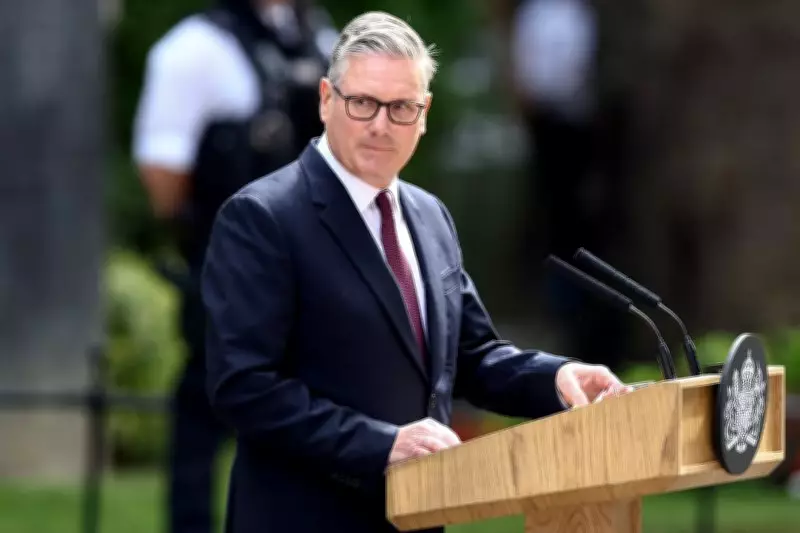
Announcing his departure, Starmer acknowledged political reality with unusual candour. "I have heard the answer of my parliamentary party to that question, and I accept that answer with good grace," he said after concluding that he no longer commanded the confidence of his MPs.
Burnham's New Vision
The man expected to replace him, Andy Burnham, is offering a different approach. Following his victory in the Makerfield byelection, Burnham declared that Britain had been "on a path for 40 years that simply hasn't worked for people and places in this part of the world." Describing his victory as "the change moment", he promised: "We're going to lay out a new path for Britain." The message was aimed not only at voters but at his own party. "I do say to my own party, this is a final chance to change," Burnham warned after securing his commanding victory. Whether he succeeds remains uncertain.

Farage's Rising Influence
The greatest beneficiary of Britain's political upheaval has been Nigel Farage, the veteran Brexit campaigner and leader of the right-wing populist Reform UK party. Farage argues that Britain's traditional political class has failed on immigration, economic growth and national identity. "The world is changing," he declared earlier this year as Reform unveiled a programme that includes mass deportations of illegal migrants, withdrawal from some international human rights obligations and sweeping changes to the British state.
Farage's rise matters because he has shifted the centre of political debate. For much of the post-war era, arguments focused on tax, spending and public services. Today, immigration, borders, national identity and cultural change dominate political discussion. Labour and the Conservatives disagree on the answers, but both increasingly find themselves responding to questions Farage has helped place at the centre of British politics. His influence extends far beyond the size of his parliamentary party. By forcing immigration and national identity to the top of the political agenda, he has reshaped the conversation across British politics. Politicians who once spoke primarily about economic management now find themselves debating borders, integration and national cohesion.
The Immigration Dilemma
Yet Farage's challenge also exposes Britain's dilemma. Voters demand lower immigration, but the economy depends heavily on foreign workers. Universities rely on overseas students. The National Health Service and social care sectors recruit internationally. Care homes, construction companies and hospitality businesses also depend heavily on migrant labour. The question is no longer whether immigration should be reduced, but whether Britain can do so without damaging economic growth or weakening already stretched public services. That contradiction lies at the heart of Britain's current political crisis. Voters want lower immigration, stronger public services and faster economic growth. Achieving all three simultaneously may prove far more difficult than many politicians are willing to admit.
Broader Political Discontent
The concern extends beyond Labour and Reform. Liberal Democrat leader Ed Davey has argued that merely replacing leaders will not solve Britain's underlying problems. He warned that changing "the person at the top" would not fix Britain's "broken political system." More significantly, Davey said the public was becoming "pretty fed up with the merry-go-round of prime ministers." His remark goes to the heart of Britain's predicament.
At the same time, Britain's political culture has changed. The era when prime ministers were granted years to prove themselves has largely disappeared. Social media, twenty-four-hour news coverage and increasingly restless parliamentary parties create relentless pressure for immediate success. The result is a political system that appears permanently dissatisfied with its own leadership.
Institutional Stability Amid Political Volatility
Yet Britain's crisis should not be exaggerated. This is not the instability associated with military coups or fragile democracies. Governments continue to change peacefully. Elections remain free and competitive. Courts function independently. Parliament retains its authority. The paradox is that Britain remains institutionally stable while becoming politically volatile.
That distinction matters internationally. For India, Britain remains an important trading partner, source of investment, educational destination and strategic ally. The fundamentals of the relationship are unlikely to change dramatically under any mainstream British government. What may change is Britain's ability to project confidence abroad. For much of the twentieth century Britain was admired for the predictability of its political system. Today, foreign observers increasingly see a country still searching for a new balance after one of the most consequential political decisions in its modern history.
Uncertain Future
Burnham believes he can provide that balance. Farage argues that only a more radical break with the political establishment will work. Ten years after Brexit, Britain is still arguing about immigration, identity and sovereignty. Until those arguments are resolved, prime ministers may continue to come and go while the forces that produced Brexit continue to shape British politics.





