10 Game-Changing Weapons in the U.S.-Iran-Israel Conflict: From Drone Swarms to Stealth Bombers
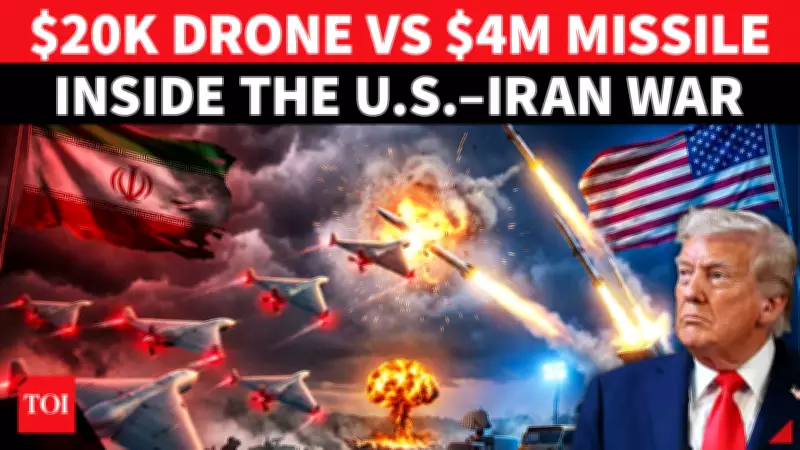
The ongoing military confrontation involving the United States, Israel, and Iran has rapidly evolved into one of the most technologically intensive battles in contemporary military history. Since hostilities commenced on February 28, 2026, the conflict has witnessed an unprecedented deployment of advanced weaponry, highlighting a stark contrast between Iran's strategy of mass-produced, low-cost systems and the United States' reliance on sophisticated, high-tech platforms.
Iran's Arsenal: Quantity Over Quality
Iran has launched a massive offensive, deploying over 500 ballistic missiles and more than 1,000 drones across the Middle East. These attacks have specifically targeted U.S. military bases, critical oil infrastructure, and key installations throughout the Gulf region. The Iranian approach emphasizes overwhelming enemy defenses through sheer numbers and cost-effectiveness.
Key Iranian weapons include:

- Shahed-136 and Shahed-131 Drones: These swarming drones are designed to saturate air defenses, making interception difficult and costly for opposing forces.
- Shahab-3 Ballistic Missile: A long-range missile capable of striking targets across the region with significant destructive power.
- Fattah Missile: A controversial hypersonic weapon that presents unique challenges for traditional missile defense systems due to its speed and maneuverability.
American and Allied Response: Precision and Stealth
In response to Iran's offensive, the United States and its allies have deployed some of the most advanced military technology in existence. The American strategy focuses on precision strikes, stealth capabilities, and layered defense systems to counter the Iranian threat.
Primary U.S. weapons systems include:
- B-2 Spirit Stealth Bomber: This aircraft can penetrate heavily defended airspace undetected and deliver devastating payloads, including the GBU-57 Massive Ordnance Penetrator, designed to destroy hardened underground targets.
- Tomahawk Cruise Missile: A precision-guided weapon that allows for surgical strikes against high-value targets with minimal collateral damage.
- Patriot Missile Defense System: A proven air defense platform that intercepts incoming ballistic missiles, cruise missiles, and aircraft.
- Terminal High Altitude Area Defense (THAAD): This system provides an additional layer of defense against short, medium, and intermediate-range ballistic missiles during their terminal phase of flight.
The Drone Defense Challenge
One of the most significant developments in this conflict has been the emergence of cost-effective countermeasures against drone swarms. The United States has increasingly deployed systems like the Advanced Precision Kill Weapon System (APKWS), which provides a relatively inexpensive solution to the expensive problem of neutralizing multiple low-cost drones simultaneously.
The Future of Warfare in the Middle East
This conflict represents a fundamental shift in military strategy, pitting Iran's doctrine of asymmetric warfare using affordable, mass-produced weapons against America's technological superiority and precision warfare capabilities. The outcome of this battle between low-cost drones and high-tech defense systems could very well determine the future trajectory of warfare throughout the Middle East and beyond.
The technological intensity of this conflict underscores how modern warfare is increasingly defined by the interplay between offensive swarm tactics and sophisticated defensive networks. As both sides continue to adapt and innovate, the weapons deployed in this conflict will likely influence military doctrines and procurement strategies for years to come.