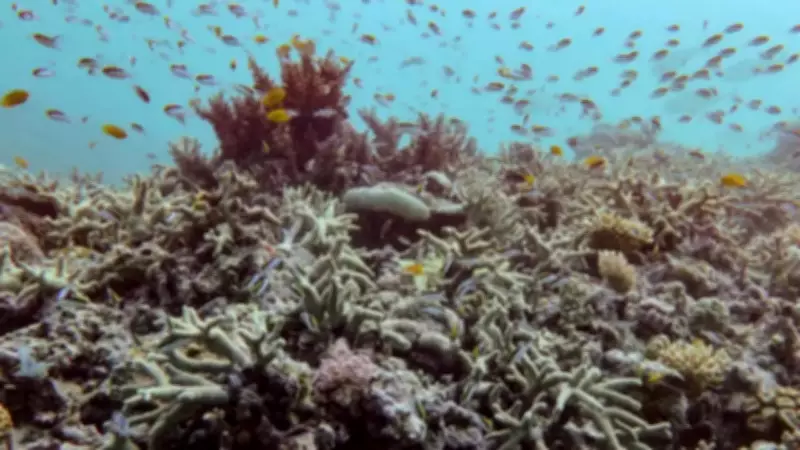
Mother and Daughter Uncover World's Largest Coral Colony on Australia's Great Barrier Reef
In a remarkable marine discovery, a mother and daughter team have identified what is now recognized as the world's largest known coral colony, located on the Great Barrier Reef in Australia. Sophie Kalkowski-Pope and her mother, Jan Pope, made this groundbreaking find late last year while participating in the Great Reef Census, an initiative reported by CNN that mobilizes over 100 vessels to gather images and data for conservation purposes.
From Suspicion to Confirmation: The Discovery Process
Jan Pope, who had previously dived at the site, suspected something extraordinary was present due to unusual features she observed. Determined to investigate further, the duo returned equipped with specialized measuring tools. Upon entering the water, Kalkowski-Pope immediately grasped the significance of their sighting, describing a vast, J-shaped coral structure that overwhelmed her senses.
To document the find, she filmed herself swimming across the coral, a journey that took a full three minutes from one end to the other, highlighting the colony's immense scale. "When we hopped in the water, immediately I could recognize the significance of what we were seeing," Kalkowski-Pope recounted, emphasizing the awe-inspiring moment of realization.

Scientific Analysis and Measurements of the Coral Colony
The coral, scientifically identified as Pavona clavus, spans approximately 111 meters in length—comparable to a standard football pitch—and covers an area of nearly 4,000 square meters. Researchers confirmed these dimensions through a combination of manual underwater assessments and high-resolution aerial imagery. This data was subsequently used to construct a detailed 3D model, enabling ongoing monitoring of the colony's health and changes over time.
Environmental Factors and Conservation Implications
Scientists are now examining the specific conditions at the site to understand how such a massive coral structure has endured. Key factors under study include strong tidal currents and reduced exposure to cyclone waves, which may have contributed to its survival. This discovery is particularly timely, as coral reefs worldwide are experiencing severe bleaching events driven by rising ocean temperatures, threatening marine ecosystems.
The Great Reef Census plays a crucial role in such conservation efforts by engaging volunteers and experts in data collection. The find by the Pope duo underscores the importance of community involvement in safeguarding natural wonders, offering hope for reef resilience amid global environmental challenges.