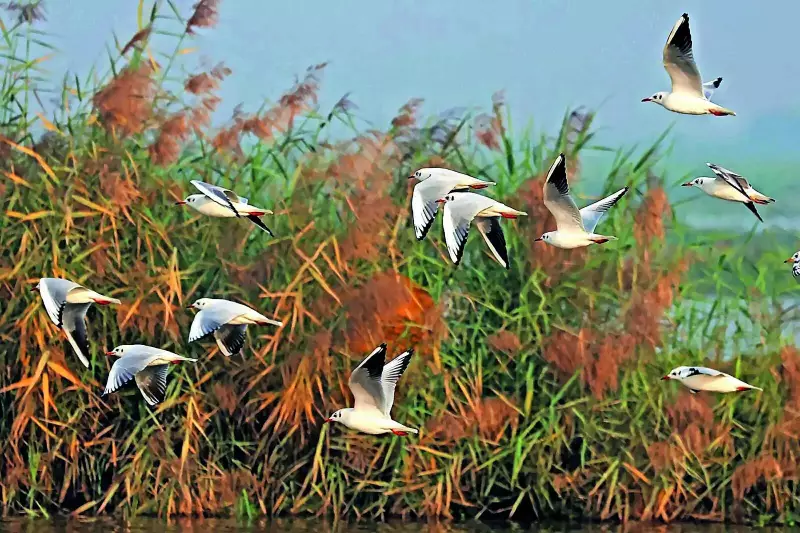
With a camera in hand and eyes trained on the greens, if you spot someone calm and composed standing along the banks of the Yamuna, or perched in Sultanpur National Park's watchtower with binoculars, chances are you've found a birder. Especially around this time of the year, as this is the season when NCR's wetlands come alive, drawing birdwatchers across the city who head out early to spot, snap, and count winter birds.
Migratory Birds Flock to NCR Wetlands
Migratory birds from Siberia, Europe, and Russia are present in the park in large numbers in Sultanpur. NCR's bird habitats are teeming with avian life this winter, says birder and bird photographer Gurnoor Dhillon, who has been actively participating in bird counts over the past two months. For Nitin Rahat, who is experiencing Delhi's birding season for the first time, winter outings are worth the early mornings despite the cold and smog.
Birders Document Winter Visitors
"I started birding two years ago in Dehradun, driven by my interest in photography. Though mornings can be harsh, winter is the time birdwatchers eagerly wait to spot passage migrants and wintering birds in large numbers. So instead of sleeping in on Sundays, birders head out," says Nitin. Rare migratory birds that are sighted in NCR include the northern lapwing, Eurasian bittern, short-eared owl, Eurasian penduline tit, grey-headed lapwing, lesser white-fronted goose, Baikal teal, marbled duck, and falcated duck.

"Many NCR birders are engaged in documenting winter visitors. Najafgarh jheel remains a lesser-explored habitat that more birders must visit. This winter, species like the variable wheatear, Eurasian hobby, Eurasian kestrel, and tawny pipit have been sighted here," says Gurnoor.
Common Sightings and Challenges
Bhumika, who began birding in January last year, says this is her second winter in the field. "I attended two WWF workshops on using birding apps. This season, I observed the arrival of waterbirds like black-winged stilts, spot-billed ducks, and knob-billed ducks, along with a variety of wagtails, herons, cormorants, and bluethroats."
Fog poses still a challenge. "Visibility drops drastically, making long-distance spotting difficult," says senior birder Pankaj Gupta. "As a new birder, recognising different warblers and wagtails by sound has been particularly challenging," adds Bhumika.
Bird Counts and Conservation Concerns
100 birders covered 9 major wetlands and 7 smaller wetlands for Asian Waterbird Count (AWC) eBird Project and counted over one lakh birds in total. "If you venture into NCR wetlands during winter, you're likely to spot migratory waterfowl such as bar-headed geese, northern pintails, and red-crested pochards, along with several waders like sandpipers, stints, and plovers, and raptors including the imperial eagle and short-eared owl," says Nitin.
However, birder Akshit Dua points to a worrying trend. "While expected species are being spotted, there's a noticeable decline in numbers of bar-headed geese, teals, and ducks like northern pintail and red-crested pochard. Polluted water, construction activity, and the spread of water hyacinth could be contributing factors. Notably, common cranes, once regular winter visitors, were not sighted this year."
Tips for Birding Expeditions
Dr Tejaswi Kumar, who has been birding since she was 10 years old, shares, "The best part about birding is its unique character to be instantaneous. We can go birding anytime and anywhere, and still, there will be something new to learn, a new species, diversity or about bird behaviour." Here are some tips to enhance your birding experience:
- Early mornings and late afternoons are the most popular times to go birding, as birds are more active during these periods.
- Join a group of birders for an enriching experience.
- Apps like Merlin will help you identify basic species and families. Upload the photo on the app if you are not able to identify the bird.
- An 8x40 pair of binoculars is good for birding.
- Avoid chatting and frequently moving, as it distracts birds.
- Wear earthy colours to blend in with nature.
- Wear comfortable shoes with a good grip.
These insights come from experienced birders and avian photographers, highlighting the vibrant yet fragile ecosystem of NCR's wetlands during winter.