

Urban Rainforest in Vashi: A Living Classroom for Biodiversity Education
In the bustling urban heart of Vashi, a remarkable educational oasis thrives on the grounds of the Indian Women Scientists' Association (IWSA). Here, naturalist Vijaya Chakravarty vividly describes a tropical rainforest as a multi-storey building, with distinct ecological niches on each floor, from ground cover to towering trees. This analogy comes to life not in the Western Ghats, but through a hands-on demonstration site that forms part of IWSA's innovative Learning Garden.
The Genesis of IWSA's Mission
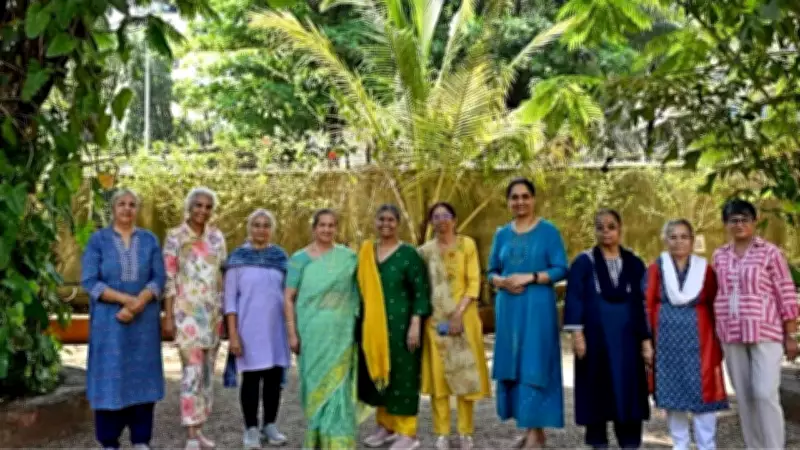
Founded in 1973 by 12 women scientists, IWSA was established to address the challenges faced by women in science, both in academic settings and fieldwork. Beyond this, the organization aimed to demystify science for the general public through accessible and engaging interventions. The Learning Garden, planted in 2018, emerged directly from this mission, designed to illustrate how ecosystems function and the vital services they provide.
Exploring the Rainforest Demo and Beyond
The rainforest section is a focal point, enclosed within a tree ring approximately 7 feet in diameter. At its center stands a majestic Peltophorum pterocarpum (copperpod), surrounded by Schefflera actinophylla (octopus tree), along with an array of shrubs, grasses, and ground-hugging plants. A detailed chart helps visitors decipher this intricate floor plan. Nearby, other demo ecosystems showcase the Western Ghats, Deccan Plateau, and Coastal Belt, each featuring mixed beds of plants representative of their biogeographical regions.

The garden boasts an extensive collection of over 500 species, organized into thematic sections:
- Butterfly, sensory, and cactus gardens
- Displays dedicated to orchids and indoor air-purifying plants like Dracaena trifasciata
- Biofuel plants such as Jatropha curcas
- Medicinal species including Cissus quadrangularis (hadjod) for bone healing
- Fruiting plants like Ziziphus mauritiana (ber)
- Prehistoric plants such as Zamia furfuracea
- Dye-yielding plants like Bixa orellana (lipstick plant)
- Plants named after musical instruments, e.g., Plumeria pudica (fiddle-leaf champa)
- An arboretum and a section on wild food plants
Educational Impact and Community Engagement
This diverse botanical haven attracts a wide audience, including school and college students, neighborhood children, botany and medical students, as well as landscapers and architects seeking inspiration. To further its educational outreach, IWSA recently launched a publication titled 'Creating Learning Gardens & Living Museums: Biodiversity, Conservation & Sustainability'. This illustrated guide serves as a primer and handbook for establishing biodiverse gardens, inspired by the Vashi project. Notably, Inner Wheel District 314, which supported the book's publication, has already replicated a similar learning garden in Palghar's Navaze village.
Chakravarty, the garden's principal designer and a book editor, emphasizes the use of stories and visual cues to aid memory. For instance, the hadjod plant resembles jointed bones and is traditionally used to treat arthritis and fractures, while Alstonia scholaris (scholar tree) is associated with the goddess Saraswati, symbolizing knowledge. Priya Jacob, IWSA secretary, highlights historical uses, such as the consistent seeds of Abrus precatorius (rosary creeper) once employed to weigh gold.
Challenges and Resilience
Despite its success, IWSA faces financial constraints that hinder full-time gardening staff and necessary supplies. Dr. Srirupa Mukherjee, garden coordinator, notes that members often cover expenses personally, with plants sourced through swaps or donations from affiliated institutions. For example, the Pterygota alata 'diversifolia' (pagal patta) was a gift from the Bhabha Atomic Research Centre.

Chakravarty poetically compares the garden's diversity to IWSA itself, noting that each leaf of the pagal patta tree is unique, much like the women scientists who nurture this vibrant urban sanctuary. This Learning Garden stands as a testament to community-driven conservation and education, bridging science and society in an ever-evolving urban landscape.





