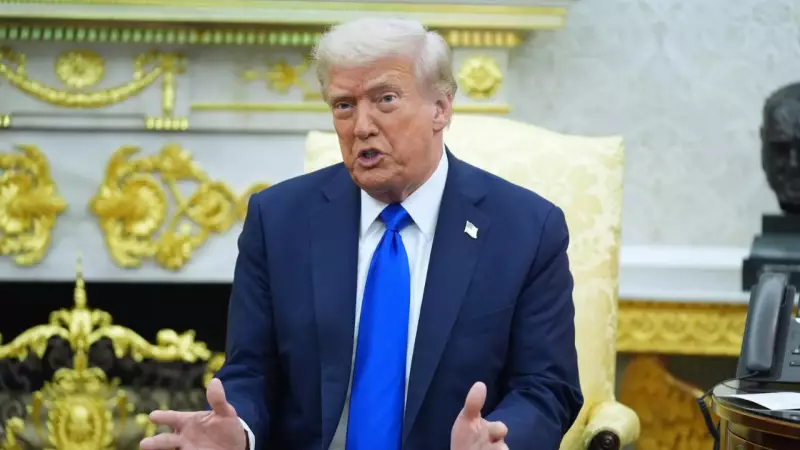
In a move that aligns with its recent stance as a climate skeptic, the United States has officially withdrawn from several major global climate institutions, including the India-headquartered International Solar Alliance (ISA). This action strips away the pretense maintained during the first term of President Donald Trump's administration.
A Surprising Exit from the Solar Alliance
The decision to leave the ISA, a collaborative initiative launched by India and France to expand solar energy use worldwide, caught many observers off guard. The Trump administration had not indicated such a step following its earlier withdrawal from the Paris Agreement on climate change. Experts note that the US exit is unlikely to derail the Alliance's core objective of mobilizing $1 trillion in solar energy investments by 2030, given America's minimal financial contribution to this goal so far.
Analysts suggest the withdrawal may be largely symbolic, reflecting the country's intensified focus on fossil fuels. This shift is in sync with President Trump's political mantra of 'Drill Baby Drill', which advocates for maximizing domestic oil and gas production. The move is seen as optics to reinforce this domestic energy agenda on the global stage.

Limited Practical Impact, Continued Private Investment
Despite the governmental pullout, private investors from the United States are expected to continue funding projects under the ISA's framework. The Alliance's strategy of concentrating on sunshine-rich developing countries offers attractive returns on investment, which will likely keep private capital flowing. Furthermore, the US government's decision is not seen as a barrier for its private companies or sub-national entities, like states and cities, from engaging with the 125-member alliance.
Broad Retreat from Climate Governance
The exit from the ISA was part of a broader disengagement, with the US also withdrawing from the United Nations Framework Convention on Climate Change (UNFCCC) and the Intergovernmental Panel on Climate Change (IPCC). This was part of a larger retreat from 66 international bodies. The decision, coming nearly a year after the Paris Agreement withdrawal, effectively ends any formal US engagement on climate issues in multilateral forums.
While rejoining the Paris Agreement could be relatively swift for a future administration, re-entering the UNFCCC and IPCC would involve a more time-consuming process. This contrasts with the approach during Trump's first term, where the US had left the Paris Agreement but continued to send delegations to climate meetings—a practice that stopped at the recent UN climate conference (COP) in Belem, Brazil.