Lasers, Satellites and Cyberattacks: How US is Crippling Iran's Arsenal
Fragments of Iranian weapons, shattered in flight or rendered useless by electronic disruption, have been falling from the skies across the Middle East. Behind many of these failures is a sophisticated network of advanced technology developed in the United States, including heat-tracking satellites, cyber warfare tools and cutting-edge laser systems specifically designed to neutralize aerial threats with unprecedented precision.
Operation Epic Fury and Laser Weapon Deployment
Military observers believe some of these formidable capabilities are being actively utilized in Operation Epic Fury, a comprehensive campaign that commenced on February 28, 2026. One of the most closely monitored developments is the suspected deployment of a ship-mounted laser weapon aboard a US Navy destroyer operating strategically off the Middle Eastern coast.
Videos officially released by US Central Command appear to show a vessel equipped with the High-Energy Laser with Integrated Optical Dazzler and Surveillance system, commonly known as HELIOS. This advanced system features a highly steerable laser that can focus a powerful, concentrated beam of energy directly on aerial targets, enabling it to disable drones and other imminent threats within mere seconds of detection.

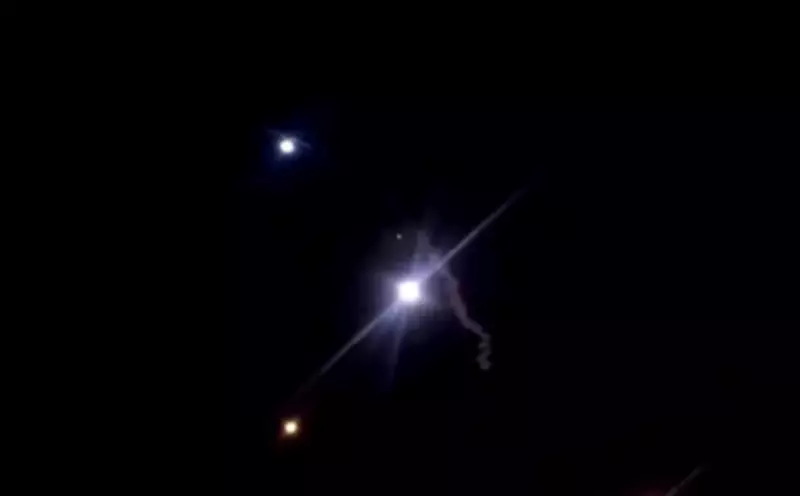
Laser-based defense technology is not exclusively limited to US forces. Additional footage circulating from the volatile skies near the Israel–Lebanon border shows rockets being launched only to explode violently seconds later. Defense analysts widely believe these successful interceptions may involve Israel’s experimental Iron Beam system, an advanced laser defense mechanism engineered to destroy incoming rockets before they can reach their intended targets.
Neither the US Navy nor the Israeli military has officially confirmed the operational use of laser weapons in the current conflict. However, the US Navy acknowledged earlier in February that the HELIOS system successfully destroyed four drones during rigorous testing phases, strongly suggesting that this transformative technology is already fully operational and combat-ready.
Intense Opening Phase and Satellite Surveillance
The opening phase of the campaign has been exceptionally intense and destructive. Within the critical first 72 hours, US forces reportedly struck approximately 1,700 high-value targets. More than 200 Iranian ballistic missile launchers, representing roughly half of the country’s entire inventory, were completely destroyed while dozens more were rendered permanently inoperable. Hundreds of additional missiles were eliminated preemptively before they could even be launched.
Much of this remarkable precision has been enabled by strategic assets operating far above the traditional battlefield. The US Space Force, established in 2019, plays an absolutely crucial role in providing real-time, actionable intelligence for coordinated air and naval operations.
According to Brent David Ziarnick, a former US Air Force officer and past lecturer in the Space Force programme at Johns Hopkins University, satellites equipped with highly sensitive infrared sensors detect the distinct heat signatures produced the moment missiles launch. "These advanced sensors can immediately and accurately identify where rockets are fired from," he explained. "Once the precise launch point is located, missile defense systems can intercept the projectile and field units receive critical early warnings to take immediate shelter."
The entire detection process happens within seconds. Infrared sensors meticulously track the intense heat generated by ascending missiles, allowing integrated defense networks to calculate their trajectory and likely destination almost instantly. Multiple reports suggest this sophisticated system has already been instrumental in helping to destroy hundreds of Iranian missiles during the ongoing conflict.

Remote Monitoring and Cyber Warfare Operations
Although the physical fighting is concentrated in the Middle East, a significant portion of the monitoring and coordination work is carried out thousands of kilometres away. Specialized personnel in the United States operate from secure facilities housing large radar domes known as radomes. These distinctive spherical structures resemble giant golf balls and are tasked with collecting vital satellite data in real time. Expert analysts then use this continuous stream of information to determine missile trajectories and predict likely targets with high accuracy.
Sam Eckhome, host of the YouTube programme Access Granted, describes the arrangement as a meticulously layered defense system combining satellites, radar installations and centralized command centres. "The entire network is ingeniously designed so that if a hostile missile is ever launched, the United States will know about it first," he stated emphatically.
Another critically important dimension of the operation is proactive cyber warfare. Working in close coordination alongside Space Force units is the formidable US Cyber Command, which focuses intensely on disrupting and degrading enemy command and control systems before missiles or aircraft are ever launched.
Ziarnick elaborated that once surveillance systems identify key enemy radar installations, dedicated cyber teams immediately attempt to disable them digitally. "They systematically infiltrate the systems and shut them down remotely," he said. "In some particularly successful cases they can even seize control of the software, essentially turning the enemy’s own equipment into a useless piece of hardware."
Joint Chiefs of Staff chairman General Dan Caine confirmed that extensive cyber operations began even before the first conventional missiles were fired. Cyber Command aggressively targeted communications networks and sensor systems across Iran with the explicit intent to "disrupt, disorient and comprehensively confuse the enemy."
Israeli Intelligence and Iranian Countermeasures
Israeli intelligence operations appear to have played a significant supporting role as well. Emerging reports suggest cyber operatives spent years quietly and persistently accessing traffic cameras across Tehran, allowing them to clandestinely monitor the movements of Iranian Supreme Leader Ayatollah Ali Khamenei and meticulously identify members of his elite security detail.
By painstakingly analyzing extensive footage from these compromised cameras, intelligence agencies were reportedly able to map the guards’ daily routines, their specific vehicles and even their personal home addresses, providing a significant tactical advantage.
One unusual aspect of the conflict involves Iran’s own defensive response to the attacks. As soon as the operation began, Iranian authorities abruptly shut down internet access across much of the country. This drastic tactic has been previously employed during domestic protests to prevent citizens from organizing demonstrations effectively.
While the widespread shutdown may severely limit public communication, security experts believe the Iranian leadership continues to operate through highly secure, internal military networks. Such isolated systems would likely become prime targets for persistent cyber infiltration attempts. "Cyber Command possesses the capability to reach out and touch adversarial systems anywhere in the world," Ziarnick warned. "It has undeniably become a formidable and relentless force in modern warfare."
The Nature of Modern Technological Warfare
The relatively low number of casualties reported among US and allied forces vividly reflects the profoundly technological nature of the entire campaign. Former Space Force officer Bree Fram believes modern warfare is increasingly reliant on sophisticated, integrated systems rather than large, conventional ground armies. "The conspicuous absence of mass formations of troops on the battlefield clearly demonstrates how advanced the underlying technology has become," she analyzed. "It represents a powerful combination of dominant systems and the specialized expertise required to operate them effectively."
Together, the coordinated use of satellites, lasers, cyber weapons and precision intelligence starkly illustrates how modern conflict is increasingly fought across invisible, non-traditional domains far beyond the conventional battlefield, reshaping the very fundamentals of military engagement and strategic deterrence.