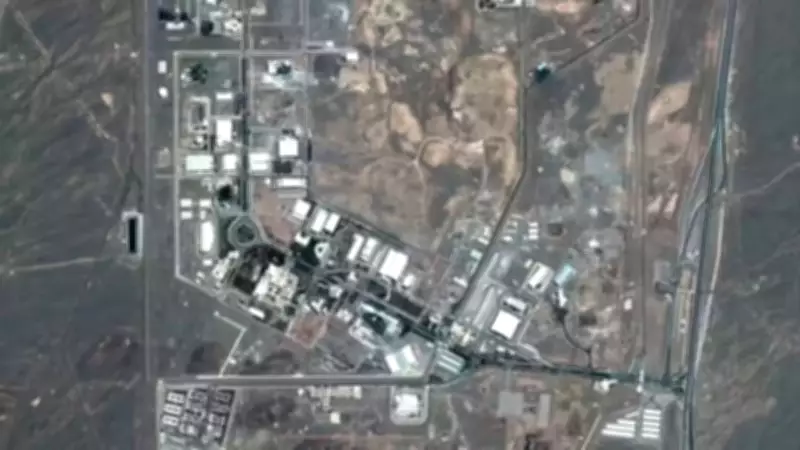
US-Israel Alliance Conducts Fresh Military Strikes on Iran's Natanz Nuclear Facility
In a significant escalation of hostilities in the Middle East, the United States and Israel carried out coordinated military strikes targeting Iran's Natanz uranium-enrichment facility on Saturday morning, according to reports from Iranian state-linked media and government officials. This latest attack marks another dangerous development in the ongoing conflict between the US-Israel alliance and the Islamic Republic.
Iran Confirms Attack on Strategic Nuclear Site
Iran's Tasnim news agency provided detailed reporting about the joint US-Israeli operation, specifically identifying the Natanz facility as the target. The Islamic Republic's atomic energy organization subsequently confirmed the strike through an official statement carried by Tasnim, describing it as "part of continued attacks on Iran's infrastructure" by what they termed "the criminal attacks by the United States and the usurping Zionist regime."
Despite the severity of the attack, Iranian officials reported that there were no immediate signs of radioactive leakage from the facility, and residents in surrounding areas were not considered to be at risk. Authorities specifically noted that "no leakage of radioactive materials" had been reported in the central Iranian region where the Natanz complex is located.

Strategic Importance of Natanz Facility
The Natanz uranium-enrichment facility represents a crucial component of Iran's nuclear program, making it a repeated target in recent military operations. This marks at least the second time this month that the facility has been attacked during US and Israeli military campaigns, underscoring its strategic importance to both sides in the conflict.
The sustained targeting of Natanz signals a continued focus by the US-Israel alliance on crippling Tehran's nuclear capabilities, which Western nations have long suspected are aimed at developing nuclear weapons despite Iran's consistent denials.
Iran's Response and Nuclear Program Claims
Following earlier attacks on nuclear facilities, Iranian President Masoud Pezeshkian had emphasized the country's determination to rebuild and restore its nuclear infrastructure. "Destroying buildings and factories will not create a problem for us, we will rebuild and with greater strength," Pezeshkian declared, while asserting that Iran's nuclear program is exclusively aimed at civilian applications.
The Iranian president specifically stated that the nuclear program is intended "for solving the problems of the people, for disease, for the health of the people," reflecting Tehran's consistent position that its nuclear activities focus on energy production and medical applications rather than weapons development.
International Concerns Over Radiological Risks
Despite Iranian assurances about no immediate radioactive leakage, global nuclear watchdog officials have expressed serious concerns about the potential risks associated with military strikes on nuclear facilities. International Atomic Energy Agency (IAEA) Director General Rafael Mariano Grossi had previously warned that "the possibility of radiological release cannot be ruled out" in such situations.
Grossi emphasized the gravity of the situation, noting that "we cannot rule out a possible radiological release with serious consequences, including the necessity to evacuate areas as large or larger than major cities." He has repeatedly urged restraint from all parties, highlighting that the region hosts multiple nuclear facilities, which raises the stakes dramatically in case of further escalation.
Broader Conflict Context and Regional Implications
The latest attack on Natanz occurs amid intensifying hostilities between the US-Israel alliance and Iran, with both sides engaged in sustained military exchanges over the past three weeks. This ongoing conflict has created significant regional instability and raised concerns about potential wider escalation that could involve multiple Middle Eastern nations.

The targeting of nuclear facilities represents a particularly dangerous dimension of the conflict, as it combines military objectives with potential environmental and public health consequences that could extend far beyond immediate combat zones.