Uttar Pradesh's Pioneering Predator-Proof House Cluster Initiative Launched in Bahraich
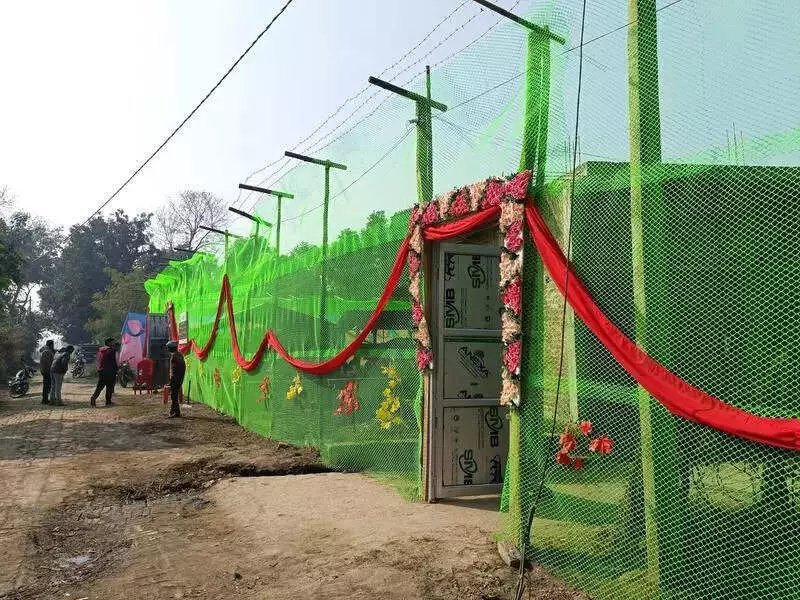
In a groundbreaking move for Uttar Pradesh, a pilot project for a Predator-Proof House Cluster (PPHC) has been inaugurated at Lohra village, situated within the Nishangada range of the Katarniaghat Wildlife Sanctuary (KWS) in Bahraich district. This innovative initiative marks the state's first effort to establish a fortified residential enclave specifically designed to shield human inhabitants from wild animal attacks while fostering a harmonious coexistence with local wildlife.
Advanced Security Features of the PPHC
The newly launched PPHC is equipped with a suite of sophisticated security measures aimed at enhancing safety. Abhishek Ghoshal, manager and head of the Wildlife Trust of India's (WTI) conflict mitigation division, elaborated on the features, stating, "The cluster incorporates metal auto-closure doors, motion-sensing lights connected to a solar-powered inverter, and a central hooter alarm system to promptly alert residents during emergencies." Additionally, safety advisories on avoiding conflicts with wildlife, particularly big cats like leopards and tigers, are displayed prominently within the area.
Structural Design and Collaborative Implementation
Ghoshal detailed that the PPHC stands at an impressive height of 12-15 feet and is strategically structured to encircle a cluster of six vulnerable village houses. Constructed using readily available and low-cost materials such as bamboo poles and PVC chain mesh, the structure comes with a manufacturer's guarantee of three years. Spanning 160 meters in length and 33 meters in width, the project incurred an approximate cost of Rs 1.5 lakh. "Each house has been fitted with an individual alarm switch to address panic situations effectively," Ghoshal added.

This pioneering project was spearheaded by the Wildlife Trust of India (WTI) and received active support from the North of England Zoological Society, commonly known as Chester Zoo in the United Kingdom. It forms a crucial component of WTI's long-term human-big cat coexistence project in the terai regions of Uttar Pradesh. The implementation also saw significant collaboration from the forest department, local communities, and rural bodies including the village panchayat and block development committee.
Addressing Critical Human-Wildlife Conflicts
The primary objective of the PPHC initiative is to safeguard local communities, especially children, residing in house clusters on the fringes of forests from attacks by wild animals such as leopards and tigers. Ghoshal highlighted the urgency of the situation, noting that there are approximately 500 highly vulnerable clusters of human habitation along the edges of KWS. These areas witness an alarming rate of 7-8 fatalities annually due to conflicts between humans and big cats.
Explaining the underlying challenges, Ghoshal said, "Katarniaghat Wildlife Sanctuary and its adjacent agricultural landscapes support a substantial leopard population with a relatively high density. The fringes are dotted with small house clusters that typically lack boundary walls and adequate lighting, offering limited protection to residents and livestock from large carnivores. Moreover, many residents sleep outdoors at night, which significantly increases their vulnerability to attacks by big cats."
Future Prospects and Community Impact
H Rajamohan, the field director of Dudhwa Tiger Reserve (of which KWS is an integral part), indicated that the forest department plans to promote the PPHC model in other sensitive areas after thoroughly assessing its outcomes and utility. This forward-looking approach aims to replicate the success of the pilot project across vulnerable regions.
The initiative has already garnered positive feedback from beneficiaries. Anit Chauhan, a resident, shared his harrowing experience with TOI, recounting how his 11-year-old daughter Kiran was attacked by a leopard outside their house last year. Fortunately, swift action by locals and family members saved her life. "I am hopeful that the PPHC will play a vital role in keeping predators at a safe distance and ensuring the safety of our families," Chauhan expressed.

This innovative project not only addresses immediate safety concerns but also sets a precedent for sustainable human-wildlife coexistence in Uttar Pradesh's ecologically sensitive zones.