

UPPCB Takes Action Against Paper Mills for Alleged Waste Burning
The Uttar Pradesh Pollution Control Board (UPPCB) has escalated its scrutiny of environmental practices in the state's industrial sector by issuing show-cause notices to six paper mills operating in Muzaffarnagar. This decisive action follows serious allegations that substantial quantities of waste from Delhi's massive Ghazipur landfill—commonly referred to as the "garbage mountain"—have been transported and burned across 21 mills in the district, sparking widespread concern about potential environmental hazards and public health risks.
Industrial Operations and Environmental Complaints
Muzaffarnagar, which officially falls within the National Capital Region (NCR), hosts 35 active paper mills. Local officials have acknowledged receiving numerous complaints from residents about persistent "stink and pollution" emanating from these facilities. In response, authorities have demanded explanations from the majority of these mills regarding their waste management and combustion practices.
Pankaj Agarwal, the state president of the UP Paper Mill Association, confirmed that over 20 mills are utilizing municipal waste material. However, he emphasized that this waste undergoes processing into refuse-derived fuel (RDF) before combustion—a practice he claims is legally permitted and environmentally supervised. "We treat municipal waste before burning it," Agarwal stated. "Paper mills employ treatment mechanisms that convert waste into RDF, which produces less pollution than traditional coal. This is an environmentally friendly fuel used in our boilers, and we maintain online pollution monitoring systems that regularly transmit air quality data to the UPPCB."

Activist Allegations and Health Concerns
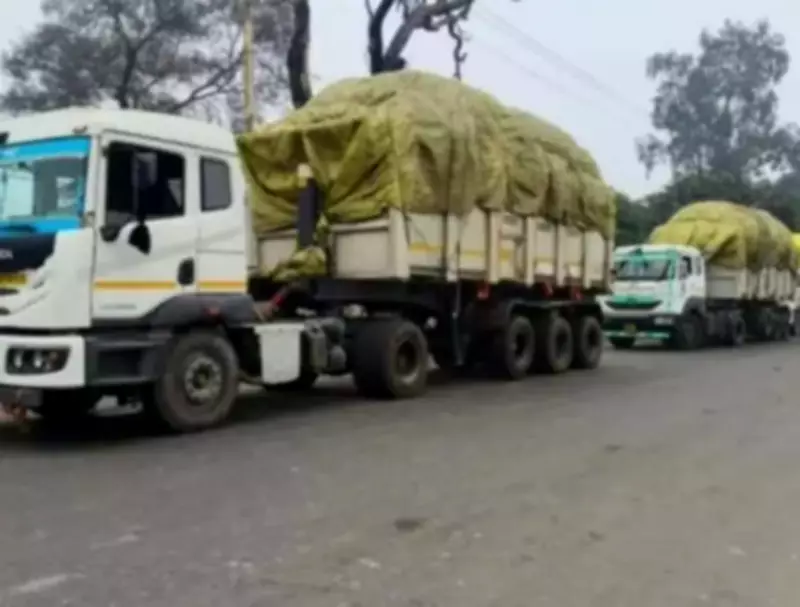
Local RTI activist Sumit Malik has strongly contested the industry's claims, alleging that mills are directly burning unprocessed garbage under the pretense of using RDF. "Over 100 trucks loaded with waste from Delhi arrive here regularly," Malik reported. "This garbage contains hazardous materials like plastic and rubber, posing serious health risks. Despite repeated complaints to authorities in Muzaffarnagar and Lucknow, our concerns have been largely ignored."
Malik further disclosed that he has been raising pollution-related complaints for years. He noted that during 2024-25, paper mill owners obtained permission from the Pollution Control Board in Lucknow to burn RDF, but he believes this authorization is being misused. "As a result, residents in rural areas of the district are experiencing health issues including cancer, asthma, respiratory problems, and eye irritation," Malik asserted. He highlighted the regulatory contradiction, pointing out that Muzaffarnagar's location within the NCR region places restrictions on RDF burning, making the continued practice particularly questionable.
Official Response and Broader Context
Gitesh Chandra, the regional officer of UPPCB in Muzaffarnagar, informed TOI that the board is actively addressing these complaints. "We are working continuously on such issues," Chandra said. "As many as six paper mills have been served show-cause notices in this regard."
The controversy has also drawn opposition from agricultural communities. On March 19, activists from a farm organization intercepted a large truck on Bhopa Road that was transporting waste from Delhi, underscoring the growing local resistance to the practice.
The Ghazipur landfill itself presents a monumental waste management challenge, towering over its surroundings and receiving thousands of tonnes of waste daily. This has led to significant pollution, frequent fires, and health concerns for nearby residents. In January 2025, the Supreme Court reprimanded the Municipal Corporation of Delhi (MCD) for failing to comply with directives on solid waste management, noting that approximately 3,000 tonnes of untreated waste continues to be dumped at the site every day.
This situation highlights the complex interplay between industrial activity, waste management, environmental regulation, and public health in rapidly developing regions, with Muzaffarnagar's paper mills now at the center of a critical environmental scrutiny.






