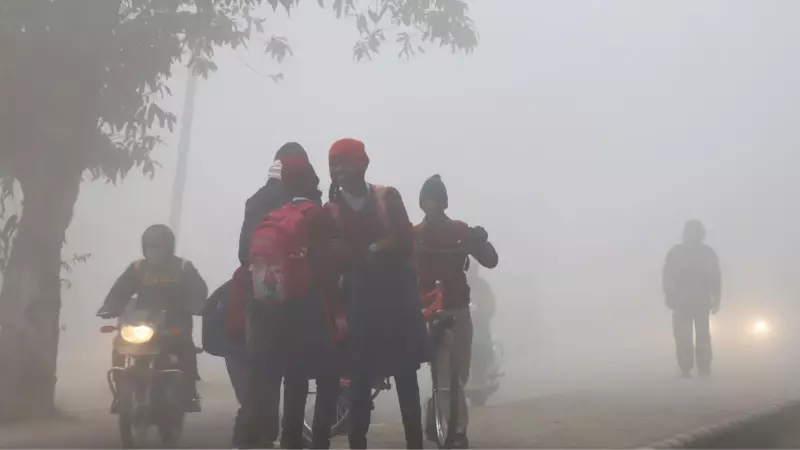
The India Meteorological Department (IMD) in Lucknow has raised serious weather alarms for Uttar Pradesh, issuing a two-tier fog alert covering a vast swathe of the state. On Wednesday, December 16, 2025, authorities warned residents of 40 districts about impending severe fog conditions that are expected to significantly disrupt daily life and transportation.
Severe Weather Warnings Across the State
The meteorological office has categorised the threat into two levels. An orange alert for 'very dense fog' has been declared for 13 districts primarily in eastern and central Uttar Pradesh. Simultaneously, a yellow alert for dense fog is in effect for 27 additional districts spanning from the eastern to the western parts of the state.
The districts under the stringent orange alert include Deoria, Gorakhpur, Sant Kabirnagar, Basti, Kushinagar, Maharajganj, Siddharthnagar, Gonda, Balrampur, Shravasti, Bahraich, Lakhimpur Kheri, Sitapur, and Bareilly. Weather experts have cautioned that in these areas, the fog could become so thick that visibility may plummet to less than 50 metres.

Widespread Disruption and Travel Hazards
The alert comes in the wake of already severe conditions experienced earlier in the week. On Tuesday, dense fog was a direct contributor to a tragic multi-vehicle collision on the Yamuna Expressway, which resulted in the death of 13 individuals. Eastern, Central, and parts of Western Uttar Pradesh had already experienced very dense fog in the early hours of that day.
The ripple effects of such low visibility extend beyond roads. Aviation sources reported that several flights from Delhi were delayed due to poor visibility, which subsequently impacted the flight schedule at Lucknow's airport as well.
Compounding Crisis: Fog and Toxic Air
Adding to the public health concern, the fog episode coincides with dangerously poor air quality in several regions. On Monday, cities in western UP, including Ghaziabad, Noida, and Greater Noida, recorded 'severe' air quality levels. The average Air Quality Index (AQI) soared above 400, with specific readings of 437 in Noida, 447 in Greater Noida, and 444 in Ghaziabad. This combination of dense fog and toxic pollutants creates a double hazard for residents, exacerbating respiratory problems and reducing visibility even further.
The IMD's warnings serve as a critical advisory for the public. Authorities are urging extreme caution for all commuters, recommending the use of fog lights, reduced speeds, and the avoidance of unnecessary travel during early morning and late-night hours when fog intensity is typically at its peak.