

Community Eco-Tourism Initiative Launched in Udanti-Sitanadi Tiger Reserve
In a significant move to blend conservation with community development, a community-based eco-tourism initiative has been officially launched in the Udanti–Sitanadi Tiger Reserve (USTR) located in Gariaband, near Raipur. This innovative program aims to address two critical issues simultaneously: protecting rare wildlife and curbing migration from the region by creating sustainable livelihood opportunities for local residents.
Goodwill Ambassadors and Conservation Success
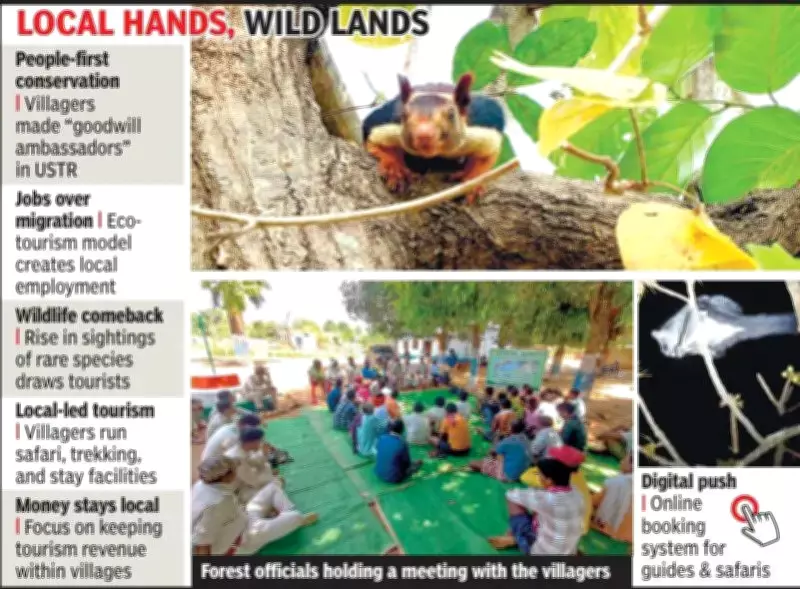
The forest department has appointed prominent local village leaders as "goodwill ambassadors" to spearhead this initiative. Their role involves working closely with field staff to spread awareness about wildlife conservation and motivate youth—both men and women—to train as nature guides and safari guides. This collaborative effort builds on joint community and departmental work over the past three years, which has already yielded positive results.
Officials report a notable increase in sightings of rare wildlife in the reserve's southern landscape, including species such as the Indian skimmer, the Indian giant squirrel, the Indian pangolin, and the peregrine falcon—the latter described as the world's fastest flying bird. These species are drawing visitors from far-off places, prompting the department to formalize a model that directly links conservation outcomes to local economic benefits.

Structured Tourism Sites and Local Leadership
The initiative organizes specific tourism sites across the reserve, each managed by local coordinators to ensure community involvement and ownership. Key sites include:
- Indian Skimmer Tourism at Kulhadighat: Led by Bansingh Shori, national president of the Kanwar Tribal Authority, offering kayaking and gypsy facilities.
- Sloth Bear Tourism at Hornbill village Odh: Coordinated by Leelesh Yadav and Rajubai Shori (Sarpanch), featuring trekking, kayaking, and accommodation at a target house.
- Wild Buffalo Tourism at Saheb Kachhar and Pagesh: Managed by Roop Singh Markam and Arjun Nayak respectively, both providing gypsy safari facilities.
- Indian Giant Squirrel Tourism at Keyba: Overseen by Dev Singh and Deepak Mandavi, with eight cottages and two gypsies available.
- Other specialized sites include Sloth Bear Tourism at Amanera under Arjun Shori, and Peregrine Falcon and Sloth Bear Tourism at Budgertippa, led by Kumari Bai Dhruv, president of the Laghu Van Upaj Samiti.
Additional locations such as Indagaon, Singhpur, Bahigaon, and Bharragaon offer tourism focused on species like sloth bears, gaurs, Indian giant squirrels, and tigers, each with designated local coordinators like Yashwant Markam, Sarpanch Madhav Markam, Sarpanch Siyaram Mandavi, and Sukhram.
Economic Benefits and Migration Curbing
A core objective of this program is to expand local employment and reduce the outflow of residents who typically migrate to southern states for work. Guides will be registered through the tiger reserve's website, enabling tourists to book safaris and guides online, thus formalizing and scaling the tourism model. Forest officials emphasize that this initiative is designed to ensure economic benefits remain within villages surrounding the reserve, reinforcing community support for protecting rare species while offering a viable local alternative to seasonal and long-term migration.
While villagers have expressed strong support for forest conservation, they have also requested the administration to provide more employment-oriented projects in the region to further bolster these efforts.

Community Meetings and Forest Protection
In parallel with the eco-tourism launch, forest officers held a meeting with villagers at Kuljharighat to discuss forest protection measures. Officials instructed the community to protect forests from fires, warning that any recurrence of such incidents could lead to a total ban on tendu leaf collection next year. The authorities also urged villagers to educate their members about the ill-effects of poaching and cautioned against entering forests with bows and arrows. Strict action will be taken against those found with intent to hunt illegally, with officials seeking cooperation from villagers to work alongside forest personnel for wildlife safety.
This comprehensive approach underscores a commitment to sustainable development, where conservation and community welfare go hand in hand, setting a precedent for similar initiatives in other regions.





