

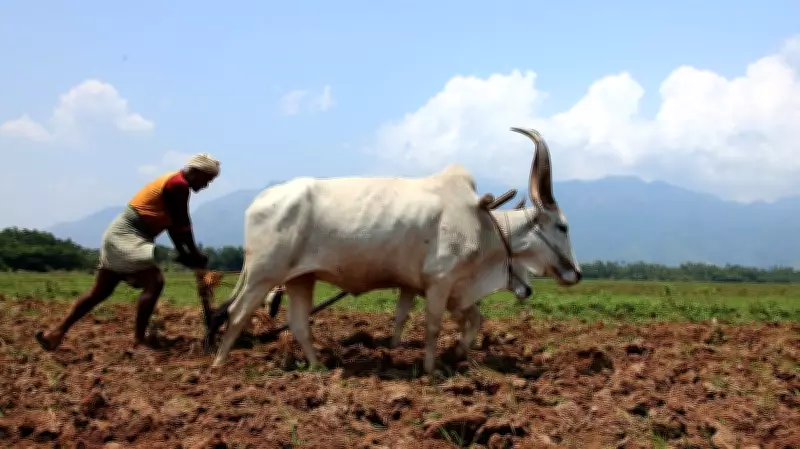
India's agricultural sector is confronting a severe dual crisis that poses a significant threat to the nation's farm economy. According to a recent editorial, the twin challenges of water scarcity and climate change are converging to undermine agricultural productivity and the livelihoods of millions of farmers.
Water Scarcity: A Growing Concern
The editorial highlights that water scarcity has become a critical issue across many parts of India. Depleting groundwater levels, erratic monsoons, and inefficient irrigation practices are exacerbating the problem. With agriculture consuming about 80% of the country's water resources, any shortage directly impacts crop yields and farm incomes.
Regions like Punjab, Haryana, and western Uttar Pradesh, which are vital for India's food security, are particularly vulnerable. The over-extraction of groundwater for irrigation has led to a rapid decline in water tables, making farming increasingly unsustainable.

Climate Change: An Escalating Threat
Climate change is intensifying the challenges faced by Indian agriculture. Rising temperatures, unpredictable rainfall patterns, and an increase in extreme weather events such as floods and droughts are disrupting crop cycles. The editorial notes that these changes are reducing the productivity of staple crops like wheat and rice, which are sensitive to temperature variations.
Small and marginal farmers, who constitute the majority of India's farming community, are the most affected. They lack the resources to adapt to changing climatic conditions, leading to debt and, in tragic cases, farmer suicides.
Impact on Food Security and Economy
The twin crises not only threaten farmer livelihoods but also pose a risk to India's food security and overall economy. Agriculture employs nearly half of the country's workforce and contributes significantly to the GDP. A decline in agricultural output can lead to higher food prices, inflation, and increased rural distress.
The editorial calls for urgent policy interventions to address these issues. It emphasizes the need for:
- Investment in water-saving technologies like drip irrigation and rainwater harvesting.
- Promotion of climate-resilient crop varieties.
- Improved forecasting and early warning systems for extreme weather events.
- Strengthening of crop insurance schemes to protect farmers from losses.
Way Forward
The government must take a multi-pronged approach to mitigate the impact of water scarcity and climate change on agriculture. This includes reforming water pricing and management, encouraging sustainable farming practices, and providing financial support for adaptation measures.
Additionally, there is a need for greater research and development in agricultural science to develop drought-resistant and heat-tolerant crops. Public-private partnerships can play a crucial role in disseminating these technologies to farmers.
The editorial concludes that without decisive action, the twin crises could lead to a long-term decline in India's farm economy, with severe consequences for the nation's development. It is imperative that policymakers, scientists, and farmers work together to build a resilient agricultural system that can withstand the challenges of the 21st century.






