Trump Explores Military Options Against Iran with Focus on Strategic Islands
US President Donald Trump is currently assessing several military strategies directed at Iran, with a particular emphasis on key islands located in the Persian Gulf. These islands hold immense strategic value due to their proximity to the Strait of Hormuz, a critical energy chokepoint, and their integral role in Iran's oil industry and military defenses. Officials have cautioned that seizing and maintaining control over Iranian territory would present significantly higher risks compared to any previous US actions in the ongoing conflict.
Pentagon Develops Plans for Knockout Blow
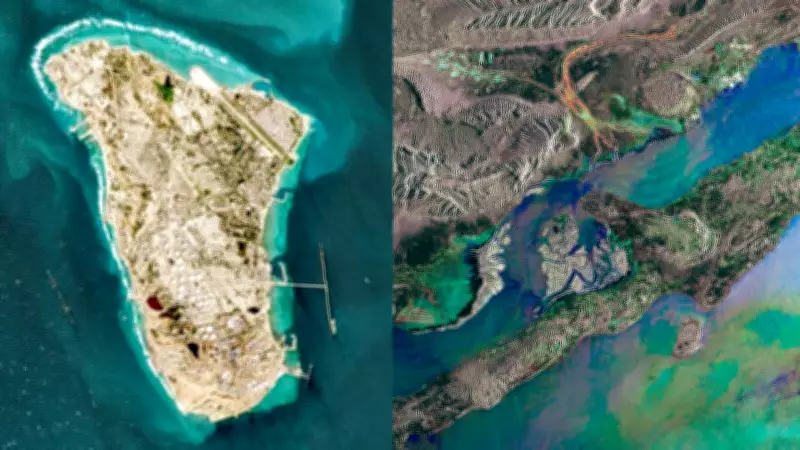
According to multiple sources cited by Axios' Barak Ravid, the Pentagon is actively formulating plans for a decisive military strike, which could involve ground operations and bombing campaigns. Among the options under consideration are capturing ships near the Strait of Hormuz or launching invasions of specific islands, notably including Kharg Island, Iran's primary oil export hub. This island, situated roughly 15 miles off Iran's coast, manages approximately 90% of the country's crude oil exports and features freshwater resources supporting thousands of residents and major infrastructure. Its deep-water ports accommodate large oil tankers, meaning a direct assault could swiftly disrupt Iran's oil exports, a significant portion of which are destined for China.
However, invading and holding Kharg Island would place US forces in a more direct line of fire than the current aerial campaign. US officials have also discussed implementing a blockade of the island as leverage to pressure Iran into negotiating a deal.

Other Key Islands Under Scrutiny
Larak Island: Positioned at the narrowest point of the Strait of Hormuz, Larak Island serves as a crucial node for Iran's oil exports. Iran utilizes this island, equipped with a network of bunkers and attack craft capable of destroying cargo ships, to monitor and maintain dominance over the strait. Seizing Larak could potentially limit Iran's ability to harass vessels and deploy mines, aiding the US in breaking Iran's chokehold on maritime traffic. Nonetheless, the island is heavily fortified, making it a challenging target for any military operation.
Abu Musa, Greater Tunb, and Lesser Tunb: These islands are located near the western entrance to the Strait of Hormuz, between Iran and the United Arab Emirates. Although claimed by the UAE, Iran has occupied them by force since 1971. They function as Iranian military outposts, armed with missiles, drones, and mine-laying capabilities. The Pentagon has reportedly suggested seizing Abu Musa. In response, Speaker of parliament Mohammad Bagher Ghalibaf stated on social media that Iranian intelligence indicates "Iran's enemies, with the support of a country in the region, are preparing an operation to occupy one of Iran's islands." He added a warning that any such action would result in relentless attacks on the vital infrastructure of the involved regional country.
Qeshm Island: As the largest island in the Persian Gulf, Qeshm is positioned off Iran's southern coast near the Strait of Hormuz. It stores anti-ship missiles, mines, drones, and other attack craft in underground tunnels, often described as "a cork in the world's most vital energy transit passage." Iran has accused the US of attacking a desalination plant on Qeshm early in the conflict, disrupting water supplies to local villages—an allegation the US denies. Covering about 558 square miles, Qeshm represents a massive target, with no current indications of a planned occupation.