

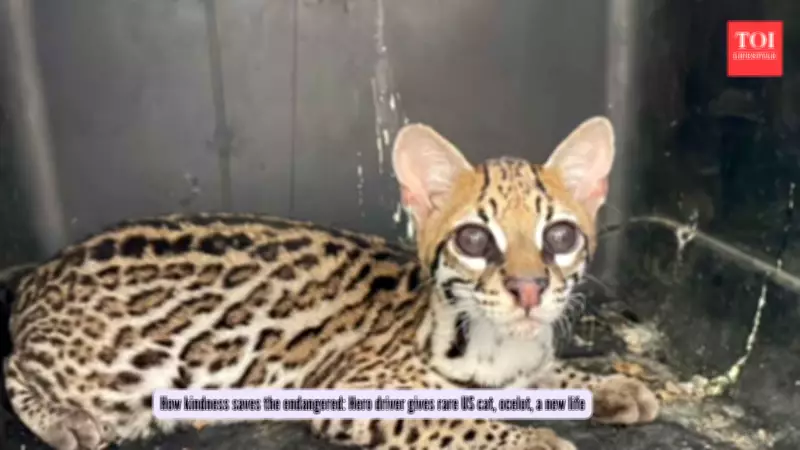
Kind Traveler Rescues Rare Ocelot in Colombia, Sparks Wildlife Chain Reaction
Sometimes, a single compassionate decision can set off a powerful chain of events that transforms a dire situation. Imagine driving along a highway, focused on your journey, when you notice something vulnerable and distressed by the roadside—a stray animal, injured and alone. While many might hesitate due to concerns about inconvenience or potential danger, one individual's choice to stop and offer assistance can initiate a life-saving sequence. These quiet, personal decisions powerfully demonstrate our capacity to positively impact the world, particularly for creatures that cannot advocate for themselves.
Ocelot Rescue Near Bogotá: A Traveler's Compassionate Intervention
During a drive from Colombia's Caribbean coast toward the interior, a kind-hearted traveler encountered a frail and weakened ocelot alongside the road near Fusagasugá, located just outside Bogotá. Rather than continuing past, the traveler carefully picked up the distressed wild cat, provided it with nourishment, and ensured its safety until reaching the nearest town. Upon arrival, the individual promptly handed the ocelot over to the appropriate authorities for professional care.
According to the Corporación Autónoma Regional de Cundinamarca (CAR), the man reported that he had discovered the ocelot in extremely poor condition on a highway while returning from the coastal region. This act of kindness set in motion an official wildlife rescue operation that highlights the importance of public involvement in conservation efforts.

Official Wildlife Response and Specialized Rehabilitation
The alert regarding the ocelot was received through CAR's dedicated wildlife emergency hotline. Érika Álvarez, head of the Sumapaz Regional Directorate, stated in a CAR press release that the response team acted swiftly. "On the same day the call was received, our specialized team traveled to the location, collected the ocelot, and began providing immediate and specialized care," Álvarez explained.
Once stabilized sufficiently for transport, the wild cat was transferred to the Wildlife Care and Assessment Center (CAV) for comprehensive rehabilitation. Álvarez emphasized the rarity of this case, noting, "This marks the first ocelot we have received at our regional office," underscoring the unusual nature of the incident in that area.
Understanding the Ocelot: Ecology and Conservation Status
The ocelot, scientifically known as Leopardus pardalis, ranks as Colombia's third-largest wild cat species, following jaguars and pumas. These predators play a crucial ecological role by hunting rodents, iguanas, and snakes, thereby helping to maintain balanced forest ecosystems. While the International Union for Conservation of Nature (IUCN) Red List classifies ocelots globally as "least concern," local populations in Colombia face significant declines primarily due to habitat destruction and fragmentation.
Major threats to ocelots include expanding road networks, agricultural development, heavy vehicular traffic, and the illegal pet trade. In fact, more than half of the small wild cats seized in Colombia belong to this species. In 2025 alone, the Sumapaz Regional Directorate provided care for over 80 wild animals, reflecting ongoing conservation challenges.
Currently, the rescued ocelot remains under close observation at the CAV, where it is progressing steadily toward an eventual return to its natural habitat. This successful rescue operation serves as a poignant reminder of how individual kindness, combined with organized wildlife response systems, can create meaningful outcomes for endangered species and broader environmental preservation.






