

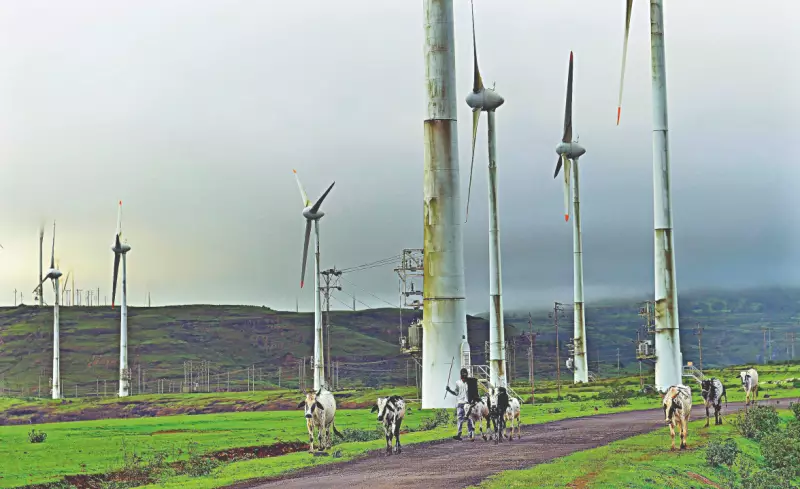
Tamil Nadu's Revised Wind Energy Policy Targets Top Position
A recent government order issued in mid-January could potentially propel Tamil Nadu back to its former glory as India's leading wind energy producer. The order introduces significant amendments to the state's Wind Repowering and Life Extension Policy (WRLEP) 2024, originally formulated to enhance wind power capacity after Gujarat surpassed Tamil Nadu in installed capacity.
Addressing Industry Concerns Through Policy Revisions
The 2024 policy initially faced resistance from wind energy generators who challenged its provisions in court. Their opposition centered on what they deemed impractical banking arrangements, substantial deposits required with distribution companies, and the compulsory replacement of turbines as old as 20 years. To resolve these disputes, the Tamil Nadu Green Energy Corporation (TNGECL) established a sub-committee to review and propose modifications.
The January 14 government order officially approved the sub-committee's recommendations, which include extending the operational lifetime of windmills installed after 2016 to 25 years. Additionally, development charges have been substantially reduced from 3 lakh rupees per megawatt to just 50,000 rupees, making projects more financially viable for developers.

Industry Leaders Welcome Simplified Certification Process
T Shivaraman, chairman of the Indian Wind Power Association, highlighted that the original policy mandated certification according to stringent international standards, which were both difficult to obtain and prohibitively expensive. "Now this certification process is modified, made simple and relevant for the old turbines considering the ground realities, and that will serve the intended purpose," he explained.
TNPDCL chairman J Radhakrishnan expressed optimism about the revised policy, stating, "The revised policy will act as a catalyst for wind energy generators to come forward to repower windmills and increase installed capacity." This sentiment was echoed by TNGECL managing director Aneesh Sekhar, who projected an immediate capacity increase of 500MW to 1,000MW as existing generators opt to replace aging turbines.
Hybrid Projects and Investment Prospects
Sekhar further revealed that TNGECL plans to lead by example through a pioneering hybrid project in Kayathar, combining wind and solar energy to achieve a total capacity of 40MW. "Windmills up to 3.2MW capacity will replace the old wind turbines," he confirmed, emphasizing the technological upgrade involved.
K Venkatachalam, chief advisor of the Renewable Energy Producers Association (REPA), anticipates that the policy revisions will attract more investors to Tamil Nadu's wind sector. The state's renewed focus on creating a favorable regulatory environment is expected to stimulate both domestic and international investment in renewable energy infrastructure.
With Gujarat currently holding the top position with 13,816.68MW of installed wind capacity compared to Tamil Nadu's 11,398.31MW, these policy adjustments represent a strategic move to close the gap and potentially reclaim leadership in India's wind energy landscape.






