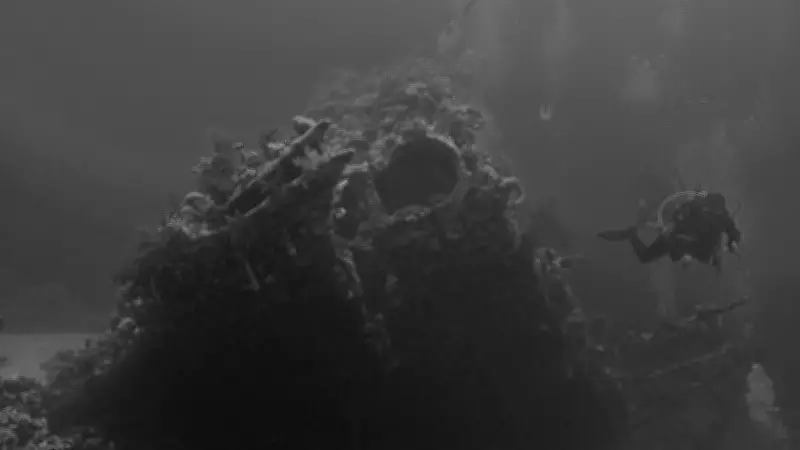
The Titanic's Eerie Secret: Why No Skeletons Remain in the Deep Atlantic Wreck
On that fateful night of April 15, 1912, the RMS Titanic met its tragic end after colliding with an iceberg in the frigid North Atlantic. The disaster claimed over 1,500 lives, leaving a legacy of sorrow and mystery. However, when renowned explorer Robert Ballard finally located the wreck in 1985, resting at a staggering depth of 3,800 meters, he encountered a haunting scene. Instead of the expected skeletal remains, the site was eerily populated only by scattered shoes, clothing, and personal artifacts—a silent testament to the lives lost.
A Biological and Chemical Erasure
The absence of human remains on the Titanic is not a mystery of disappearance but one of natural processes. In the deep ocean, a combination of biology and chemistry works relentlessly to recycle organic matter. Deep-sea scavengers, including various microorganisms and creatures, swiftly consume flesh in the cold, oxygen-poor waters. As Robert Ballard explained in a 2009 NPR interview, "On the Titanic and on the Bismarck, those ships are below the calcium carbonate compensation depth. So once the critters eat their flesh and expose the bones, the bones dissolve."
This process is accelerated by the ocean's chemistry. Below the calcium carbonate compensation depth (CCD), which ranges from 900 to 1,500 meters, the water becomes acidic and undersaturated with calcium ions. Bones, primarily composed of calcium phosphate, cannot survive in such conditions. The Titanic, lying far beyond this depth, experiences complete dissolution of skeletal structures over time. Ballard noted, "You pass below what's known as the calcium carbonate compensation depth at depths below about 3,000 feet. Additionally, the water in the deep sea lacks calcium carbonate, which is the primary component of bones."

Eyewitness Accounts from the Deep
James Cameron, the director of the 1997 blockbuster film Titanic, has spent more time exploring the wreck than the ship's original captain. After 33 dives, he confirmed the lack of human remains in a 2012 New York Times interview. "I’ve seen zero human remains… We’ve seen clothing. We’ve seen pairs of shoes, which would strongly suggest there was a body there at one point. But we’ve never seen any human remains," he stated. This observation underscores the efficiency of deep-sea decomposition.
Maritime archaeologist James Delgado, senior vice president at SEARCH Inc., offers a nuanced perspective. While expeditions have shown no visible remains, he suggests in a Mail Online interview that faint traces might linger undetectably inside the wreck. "There could be a possibility of some semblance of human remains," he said, though current technology has not revealed any.
The Role of Scavengers and Recovery Efforts
In the immediate aftermath of the sinking, recovery ships managed to retrieve only 337 bodies; the rest either drifted away or sank with the vessel, becoming easy targets for Atlantic scavengers. At 3,800 meters, the Titanic's environment is teeming with bacteria and other organisms that begin breaking down soft tissues within days. Unlike shallower wrecks with fewer scavengers, this site sees a rapid consumption of organs and muscle, leaving nothing behind.
Ballard emphasized that in this frenzied environment, flesh disappears first, exposing bones that then dissolve due to the hostile chemical conditions. This contrasts with older wrecks in shallower waters, where skeletons can be preserved due to less aggressive biological and chemical factors.
Preservation and Ethical Considerations
The puzzle of the missing skeletons reveals the ocean depths as nature's ultimate recycler, transforming tragedy into a spectral relic. This absence has inadvertently preserved the Titanic as a solemn memorial rather than a macabre exhibit. James Delgado, who participated in advanced expeditions to map the wreck, stresses the importance of ethical diving practices. During a 2010 expedition, he highlighted, "This will be the first time that someone has looked at, mapped, plotted and brought back to the surface the sense of the entire Titanic site."

Modern technologies like 3D mapping have confirmed the void of human remains, aiding in preservation efforts as the wreck continues to decay. This story, gripping a century later, whispers of hubris, profound loss, and the sea's unforgiving embrace—a reminder of both human vulnerability and nature's relentless cycles.