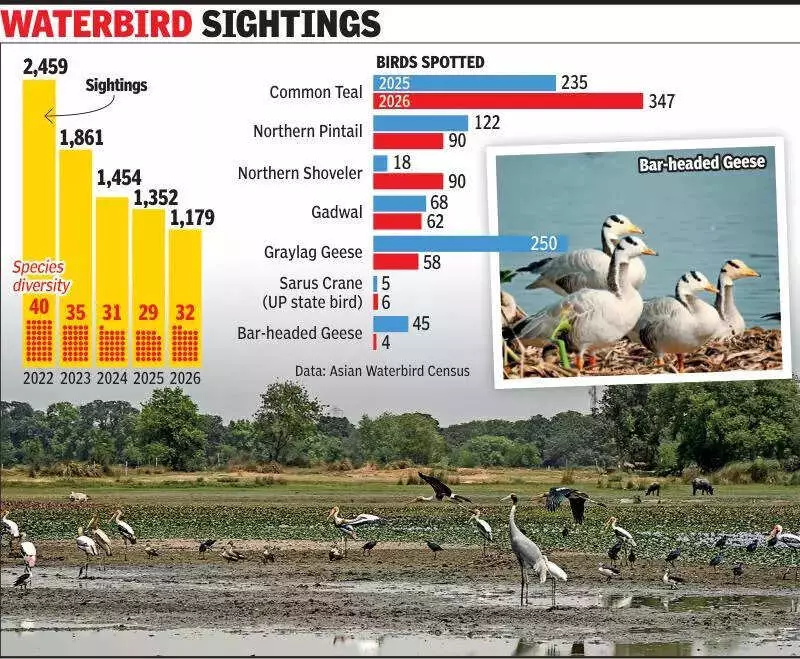
The latest Asian Waterbird Census (AWC) has delivered alarming news for bird conservation in the National Capital Region. The survey indicates a drastic reduction in the number of both local and migratory birds at the crucial Dhanauri wetland in Noida, a major pit stop on the Central Asian Flyway.
A Steep and Worrying Decline
This weekend's census recorded only 1,179 birds across 32 species at the wetland. Shockingly, a mere 14 of these species were migratory. This figure represents a near 50% collapse compared to the count from just five years ago. In 2022, the AWC had documented 2,459 birds from 40 species, with 20 being migratory.
TK Roy, the AWC Delhi-NCR state coordinator for Wetlands International South Asia, explained to The Times of India that relentless human activities are to blame. "Anthropogenic pressures like farming and construction in and around the wetland are severely disturbing the natural habitat," he stated, warning that these birds may soon abandon Dhanauri entirely.

Encroachment and a Lost Ramsar Chance
Environmentalists have long raised alarms about the wetland's degradation. As surrounding wetlands dried up, agriculture rapidly ate into the bird habitat. Expanding human settlements brought stray dogs that prey on the birds, compounding the problem.
"It is already too late for conservation measures — significant damage has been done," Roy emphasized, calling for urgent demarcation and protection of the wetland from human interference. Known as a habitat for the Sarus crane, Uttar Pradesh's state bird, Dhanauri's hope for strong protection through a Ramsar tag was dashed in December last year. The state government declined to seek the international designation, citing the wetland's proximity to residential sectors and the upcoming Noida International Airport.
Airport Operations and a Biodiversity Park Plan
Instead of Ramsar protection, the Yamuna Expressway Industrial Development Authority (YEIDA) has proposed developing a 112-hectare biodiversity park in the area. However, experts fear this may not be enough. Roy pointed out a new looming threat: "Once the Noida airport becomes operational, frequent aircraft movement along the Central Asian Flyway is likely to further deter migratory birds from using Dhanauri as a preferred stopover."
While this year's census noted 32 species, up from 29 last year, the overall bird count fell from 1,352 to 1,179. Roy cautioned against finding solace in the species number. "We cannot take comfort in the rise in species count, as only one Wood Sandpiper and one Citrine Wagtail were recorded, apart from an indigenous species, and even those sightings were in single digits," he said. The iconic Sarus crane count remains critically low, with just six spotted this year versus five last year.
The data paints a clear picture of a vital ecosystem under siege, with its feathered visitors disappearing at an alarming rate, raising urgent questions about the future of urban biodiversity conservation.