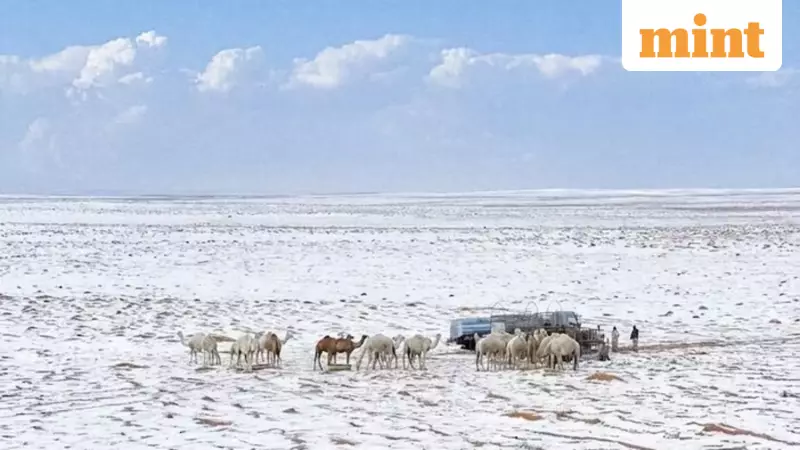
In an extraordinary weather event, vast stretches of northern Saudi Arabia's desert landscape were transformed into a winter wonderland this week following a rare and heavy bout of snowfall. Iconic golden sand dunes in regions like Tabuk and Al-Jawf were blanketed in thick, white snow as temperatures dipped below freezing point.
Stunning Visuals and Historical Context
The surreal sight of camels trekking through snow-covered deserts quickly captivated social media platforms, with visuals spreading widely. While snowfall in northern Saudi Arabia is uncommon, it is not unprecedented. It has been recorded before, particularly in the higher elevations of the Tabuk region, where snow has appeared sporadically over the years.
The current cold wave evokes memories of historic chills. According to the Saudi National Center of Meteorology (NCM), the Kingdom's strongest recorded cold wave happened in 1992. During that event, temperatures at the Hail weather station in the northwest plummeted to a record low of –9.3°C in January. Historical accounts also note that in January 1973, a powerful Siberian polar outbreak reportedly brought nearly 20 centimetres of snow to the capital, Riyadh.

The Climate Change Connection
Meteorologists are partly linking this ongoing extreme cold wave to the broader phenomenon of climate change. Specialists from the World Meteorological Organization point out that the Arab region is heating up at almost double the global average. This rapid warming creates a scenario scientists describe as the “warming paradox.”
This paradox means that higher overall temperatures allow the atmosphere to hold more moisture. When the right atmospheric conditions align, this can lead to more intense and extreme weather events, including severe rain and, in cold conditions, heavy snowfall.
Why Does It Snow in a Desert Kingdom?
Although Saudi Arabia is famously a desert nation known for blistering summer heat that often exceeds 50°C, snowfall is not entirely unusual in specific areas. This occurs due to a combination of unique geographical and atmospheric factors:
- High Elevation: Northern mountainous regions, such as Jabal Al-Lawz which rises above 2,600 metres, experience significantly cooler temperatures. During winter months (December to February), these high areas can become cold enough for snow.
- Cold Fronts: Powerful cold fronts moving south from the Mediterranean or northern regions can push temperatures below freezing.
- Moisture Interaction: When this cold air interacts with moisture from rain-bearing systems linked to the Mediterranean or Arabian Sea, precipitation forms. If temperatures are sufficiently low, this precipitation falls as snow instead of rain.
A recent notable event occurred on 18 December 2025, when northern areas including Tabuk and the surroundings of Jabal Al-Lawz were covered in snow. Snowfall in deserts globally is rare but documented. Other deserts that have seen snow include the Sahara in Algeria (notably in 1979 and 2018), Chile's Atacama Desert, and parts of the Mojave Desert in the United States. These events remain unusual, typically requiring a precise combination of cold air masses and sufficient atmospheric moisture.