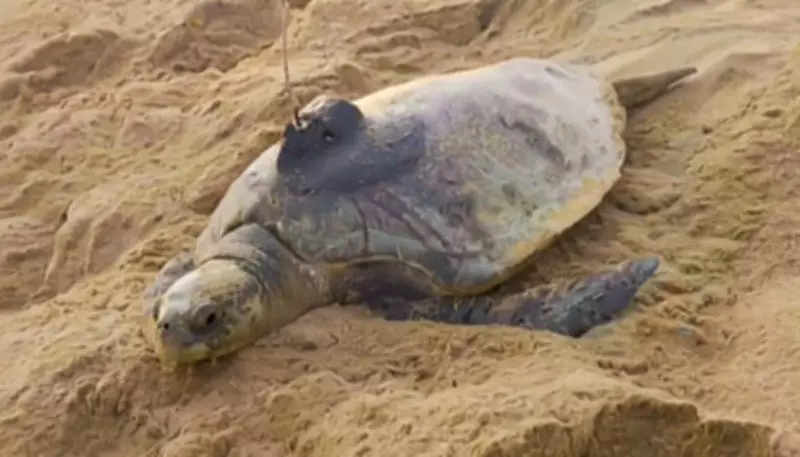
Satellite Tagging Program Uncovers Olive Ridley Turtles' Inter-Rookery Movements
In a groundbreaking development for marine conservation, the satellite tagging of olive ridley sea turtles along the Odisha coastline has provided definitive confirmation of inter-rookery movement between two of the state's major nesting sites. The study, initiated last December, has revealed that these endangered turtles actively seek safer havens when uncomfortable with their initial nesting locations.
Confirming Long-Suspected Migration Patterns
Wildlife officials have long suspected possible movement between different nesting grounds, but concrete evidence remained elusive until now. The latest data from eight turtles fitted with satellite transmitters has conclusively demonstrated movement from the Gahirmatha rookery to the Rushikulya rookery. The tagged group included both male and female turtles, enabling researchers to compare movement patterns between sexes for the first time.
"The inter-rookery movement indicates that turtles, when not comfortable for nesting and laying eggs, begin to shift to other safer rookery," explained Sunny Khokhar, divisional forest officer (Berhampur), who oversees protection measures at Rushikulya.

Detailed Behavioral Insights Emerge
The ongoing study has yielded several significant findings about olive ridley behavior during breeding season:
- Turtles predominantly remain near shore, mostly within 5 kilometers of the coastline
- Some individuals venture as far as 35 kilometers offshore
- One female turtle demonstrated remarkable movement from Gahirmatha to Rushikulya and back again
- The tagging confirms ecological connectivity between these major nesting grounds
Scientific Significance and Conservation Implications
Sushil Datta, an expert who has extensively studied olive ridley turtle habitats, emphasized the importance of these findings. "It will help understand the spatial dynamics of breeding populations and in identifying critical habitats that need stronger protection," he stated. "Such information is vital for planning more effective management strategies."
The satellite tagging program represents a collaborative effort between the Wildlife Institute of India and the Odisha state forest department. This initiative aims to bolster marine conservation efforts while providing unprecedented insights into turtle movements near shore and their broader migratory behavior.
Methodology and Technical Details
The tagging process involves carefully capturing mating turtles near shores using specialized scoop nets. Researchers then attach satellite transmitters to the turtles' carapaces using:
- Specialized epoxy adhesive for secure attachment
- Antifouling processes to ensure device integrity
- Precision techniques to avoid harming the animals
These measures ensure the devices remain secure and transmit accurate data over extended periods, providing reliable information about turtle movements and behavior.
Future Research Directions
Early results have already demonstrated the immense value of satellite tagging as a scientific tool for marine conservation. "Now, we need to understand the turtle's behavioral biology more comprehensively," noted Datta, highlighting the need for continued research.
By mapping turtle movements with greater precision, researchers hope to generate concrete evidence that can guide habitat protection measures. The data collected will inform conservation strategies, help identify critical protection zones, and contribute to more effective management of these endangered species' breeding grounds along the Odisha coastline.
The confirmation of inter-rookery movement represents a significant advancement in understanding olive ridley turtle ecology, providing wildlife officials with scientific evidence to enhance protection measures and ensure the long-term survival of these remarkable marine creatures.