

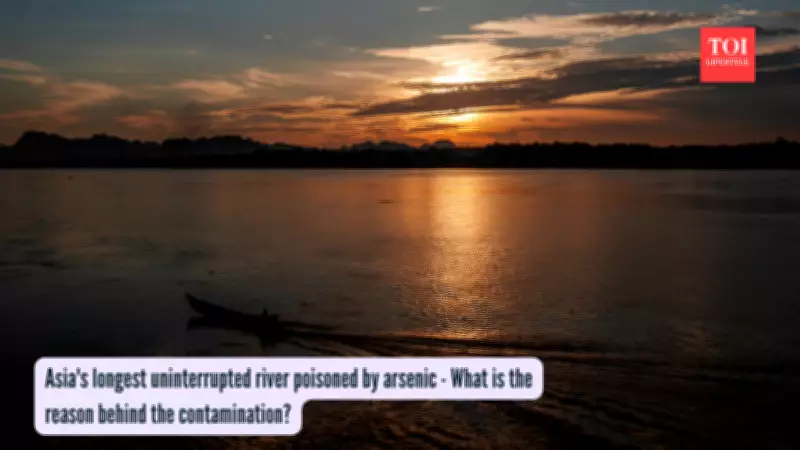
Salween River Faces Grave Arsenic Contamination Crisis
Rivers have historically served as the lifeblood of civilizations, shaping landscapes and sustaining diverse ecosystems and human settlements across millennia. However, escalating human activities are increasingly transforming these pristine waterways into conduits of silent peril. A stark illustration of this emerging threat is the Salween River, which remains one of Asia's last major undammed rivers yet is now confronting severe contamination that jeopardizes its vital role.
Asia's Longest Free-Flowing River Under Siege
The Salween River, extending an impressive 3,300 kilometers from the snowmelt of Tibet through China and Myanmar, briefly skirting Thailand's border before emptying into the Andaman Sea, holds the distinction of being Asia's longest undammed waterway. According to detailed reports from Mongabay, a prominent environmental and conservation platform, this river functions as an indispensable lifeline for numerous ethnic communities, including the Karen people, while simultaneously supporting a rich biodiversity hotspot teeming with unique flora and fauna.
Alarming Arsenic Levels Detected in Waterways
Independent testing initiatives launched in September 2025 by Thailand's Institute of Health Sciences Research at Chiang Mai University have uncovered toxic concentrations of arsenic within the Salween River, following similar contamination issues identified in adjacent rivers such as the Kok, Sai, and Ruak. Mongabay's analysis reveals that arsenic measurements at every monitoring station along the Salween exceeded the World Health Organization's safety threshold of 0.01 mg/L by more than double, with certain locations registering levels up to five times higher than permitted limits.

The Karenni state's Interim Executive Council issued a formal warning on February 25, indicating that mainstem arsenic concentrations had reached 0.096 mg/L, while the Molo Creek tributary showed a dramatic surge to 0.554 mg/L. These findings underscore a rapidly escalating environmental and public health emergency affecting the region.
Unregulated Mining Operations Identified as Primary Culprits
Investigations point to unregulated mining activities in Myanmar, particularly within Shan state, as the leading suspects behind the heightened arsenic levels. The US-based Stimson Center has meticulously identified 127 suspected mining sites across the Salween basin between 2016 and 2026 using advanced satellite imagery, noting the emergence of 28 new sites since 2023 alone. Among these, five operations employ in situ leaching techniques for rare earth element extraction.
These mining endeavors are primarily focused on extracting minerals essential for modern technologies, including artificial intelligence systems, smartphones, electric vehicles, and renewable energy infrastructure. Additionally, clandestine gold mining operations controlled by various armed groups such as the United Wa State Army, the Myanmar National Democratic Alliance Army, and military factions further exacerbate the pollution crisis.
Growing Concerns and Calls for Coordinated Action
Local fishing communities and residents are now on high alert, actively avoiding direct contact with the contaminated river waters due to health risks. In response, a Thai working group has been established to address Salween River contamination, although official communications regarding specific strategies and timelines remain notably vague and insufficient.
The Mekong River Commission has similarly raised alarms about arsenic and mercury pollution originating from Shan state mines, which are contaminating downstream waterways across Southeast Asia. Reuters has issued warnings that toxic mining practices pose a broad threat to the region's rivers and populations, highlighting the urgent need for intervention.
Safeguarding the Salween River demands immediate and robust regional cooperation to implement effective pollution controls and sustainable practices before irreversible ecological damage and public health consequences become entrenched. The preservation of this critical aquatic lifeline is essential for the well-being of both the environment and the communities that depend upon it.






