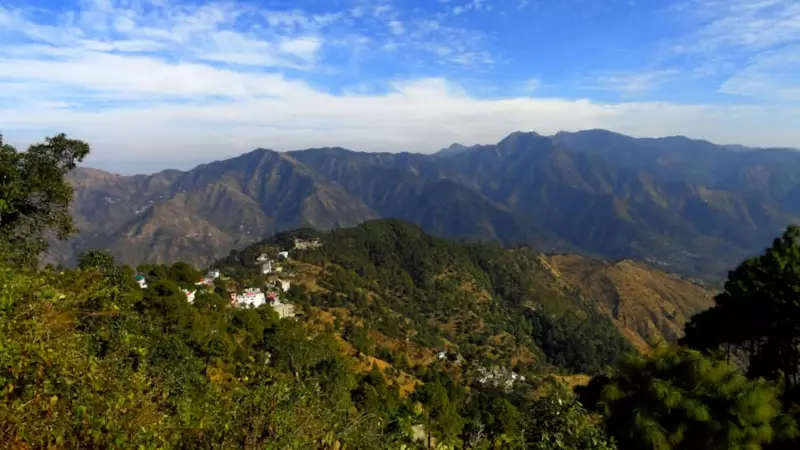
A significant environmental protest march, receiving backing from the Rashtriya Swayamsevak Sangh's (RSS) environmental wing, reached its conclusion in Harsil, Uttarakhand, on Sunday. The yatra was organised amid escalating concerns over plans to cut down thousands of trees in the ecologically sensitive Uttarkashi-Gangotri region for the Char Dham all-weather road project.
Symbolic Rituals and High-Profile Support
The event saw around 100 participants engage in a poignant act of conservation. They performed symbolic worship and tied Raksha Sutras (sacred protective threads) on ancient Deodar trees along one of the last pristine stretches of the upper Ganga river. The gathering included Gopal Arya, the head of the RSS's environment wing.
In a show of substantial support, senior leaders conveyed solidarity through video messages during the tree-worship ceremony. BJP patriarch Murli Manohar Joshi and RSS joint general secretary Krishna Gopal addressed the participants, blending strategic concerns with environmental imperatives.

Calls for Sustainable Development Model
Participants and leaders unanimously stressed the urgent need for an alternative and sustainable road-building model. They argued that blanket widening, especially in fragile river valleys and disaster-prone zones like the Himalayas, is counterproductive. The focus, they emphasised, must shift to disaster-resilient infrastructure that safeguards the mountain ecology.
In his video address, Murli Manohar Joshi clarified, "We are not opposed to defence and strategic requirements. But we must be mindful that if Himalayas are not safeguarded, nothing is safe, including our economic interests and agriculture." Echoing this sentiment, RSS's Krishna Gopal stated, "We will be safe only if the Himalayas are saved... Saving these trees will be like saving the Ganga."
Legal and Environmental Backdrop
This yatra is part of a broader movement gaining momentum. It aligns with an initiative led by former union minister Karan Singh, which aims to highlight Himalayan degradation due to road-widening projects. This collective includes environmentalists, scientists, and local citizen groups.
The legal battle continues to unfold. In September 2025, Joshi and Singh wrote to the then Chief Justice of India, B R Gavai, seeking a recall and review of the Supreme Court's 2021 judgment that permitted key stretches of the Char Dham project on strategic grounds. Subsequently, on November 26, a collective named 'Himalaya to Hum Hain', backed by both leaders, announced plans to pursue an appeal against the 2021 verdict.
The immediate trigger for concern is a recent approval by the Uttarakhand government to widen a 20-km stretch between Jhala in Harsil valley and Bhaironghati. This area is ecologically fragile and was a ground zero point of the devastating Dharali landslide on August 5, which claimed 16 lives, underscoring the region's vulnerability.