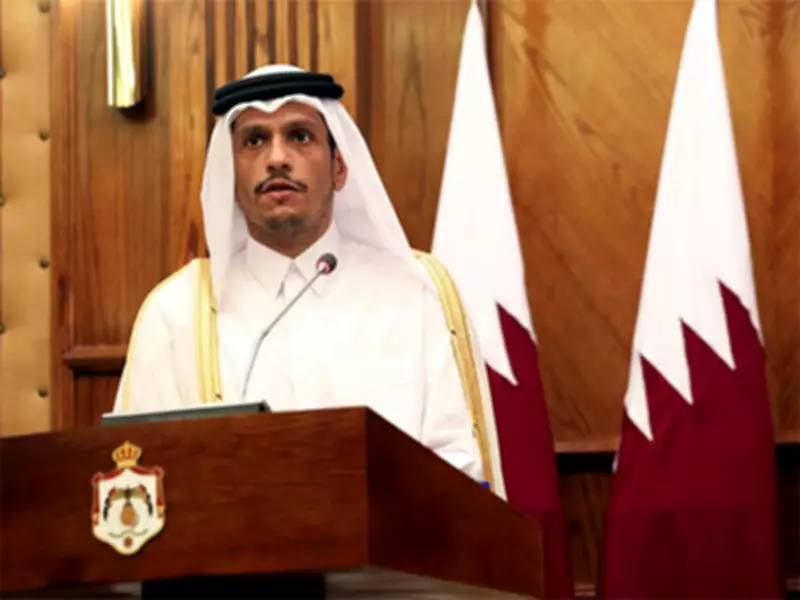
Qatar Prime Minister Condemns Iran's Claims on US Military Bases
Qatar Prime Minister Sheikh Mohammed bin Abdulrahman bin Jassim Al Thani has strongly criticized Iran's assertions that it is targeting US military bases in neighboring countries, labeling such claims as "unacceptable and unjustified." Speaking at a press conference in Doha on Thursday alongside Turkish Foreign Minister Hakan Fidan, the Qatari leader emphasized the urgent need to halt the ongoing conflict in West Asia and prevent further regional escalation.
Call for Immediate War Cessation and Regional Stability
During the conference, as reported by Al Jazeera, the Prime Minister stated, "the current war must stop immediately," urging all parties to de-escalate tensions. He specifically addressed Iran, warning against expanding the conflict beyond its current scope. "Iran must stop its attacks and not expand the conflict to the region; any expansion of the war will never enable stability," he added, highlighting the risks of prolonged hostilities.
Economic Fallout from Iranian Strikes on Qatar's Energy Sector
The criticism comes in the wake of significant economic damage inflicted by Iranian strikes on Qatar's energy infrastructure. According to a Reuters report, these attacks crippled 17 per cent of Qatar's liquefied natural gas (LNG) export capacity, potentially sidelining production for up to five years. QatarEnergy's CEO Saad al-Kaabi revealed that the assaults resulted in an estimated USD 20 billion loss in annual revenue, posing a direct threat to global energy supplies across Europe and Asia.

The disruptions followed an unprecedented series of strikes targeting Gulf oil and gas facilities, which Iran launched in retaliation for Israeli attacks on its own gas infrastructure. The strikes specifically hit two of Qatar's 14 LNG trains and one of its two gas-to-liquids (GTL) facilities. Al-Kaabi noted that restoring the 12.8 million tons per year of LNG capacity would require a timeline of three to five years due to the extensive damage.
Regional Implications and Force Majeure Declarations
In an interview, Al-Kaabi expressed disbelief over the aggression, particularly during the holy month of Ramadan. "I never in my wildest dreams would have thought that Qatar would be - Qatar and the region - in such an attack, especially from a brotherly Muslim country in the month of Ramadan, attacking us in this way," he said. The disruptions forced state-owned QatarEnergy to consider declaring force majeure on long-term contracts for LNG supplies destined for Italy, Belgium, South Korea, and China.
Al-Kaabi explained that while shorter-term declarations had occurred earlier, the current damage necessitated longer extensions. "I mean, these are long-term contracts that we have to declare force majeure. We already declared, but that was a shorter term. Now it's whatever the period is," he stated, underscoring the severity of the infrastructure loss and its impact on international energy markets.
Broader Context of Regional Tensions
The Qatari Prime Minister's remarks underscore growing concerns over regional stability amid escalating conflicts. Key points from the press conference include:
- Emphasis on the unacceptability of Iran's justifications for targeting US bases.
- Warnings against further conflict expansion to maintain peace.
- Highlights of the economic and energy repercussions from recent strikes.
This development reflects the complex geopolitical dynamics in West Asia, where diplomatic efforts are crucial to avert a broader crisis. The call for war cessation and criticism of Iran's actions align with Qatar's role in advocating for regional dialogue and stability.