

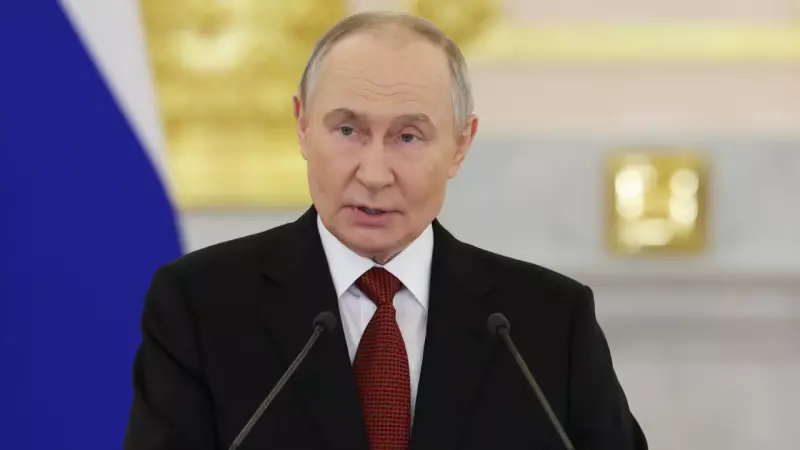
Russian President Vladimir Putin engaged in crucial telephone discussions on Friday with two key leaders in West Asia. He spoke separately with Israeli Prime Minister Benjamin Netanyahu and Iranian President Masoud Pezeshkian. These conversations happened as regional tensions sharply escalated. Growing fears about a possible United States military strike on Tehran added to the urgency.
Kremlin Confirms Diplomatic Push
Kremlin spokesman Dmitry Peskov addressed the situation directly. He stated that the region is currently experiencing high tension. Peskov confirmed that President Putin continues his personal efforts to facilitate de-escalation. He described the atmosphere in Iran and the wider West Asian region as extremely tense.
According to official Kremlin readouts, Putin pledged to further strengthen the strategic partnership between Russia and Iran. This commitment comes after Russia previously offered to mediate during the brief Iran-Israel war in June.

Call with Iranian President
During his call with President Masoud Pezeshkian, both leaders emphasized the need for speedy normalization. They focused on the situation surrounding Iran and the broader region. The Kremlin reported that the two leaders noted Russia and Iran consistently take a united position. They advocate for the earliest possible de-escalation of tensions around Iran and in the region as a whole.
Furthermore, Putin and Pezeshkian expressed their shared commitment. They stressed resolving emerging issues exclusively through political and diplomatic means, not military action.
In response, President Pezeshkian thanked Putin for Moscow's support at the United Nations. He expressed clear appreciation for Russia's diplomatic position. Pezeshkian also made a pointed remark. He said the role and direct involvement of the United States and the Zionist regime in recent events in Iran is evident. He used the term Zionist regime to refer to Israel.
Background of Unrest and Conflict
Independent human rights monitors report a grim situation inside Iran. They say Iranian security forces have killed thousands of people. This forceful response came during nationwide anti-government protests. These deaths have raised international fears of a wider military confrontation.
Iranian authorities have repeatedly accused the United States and Israel of inciting the unrest. They claim these nations are attempting to undermine the Islamic republic's national unity.
Regional concerns intensified significantly after the brief war between Iran and Israel in June. That conflict saw unprecedented Israeli attacks on Iranian military and nuclear facilities. The United States briefly joined those strikes. American forces hit three major Iranian nuclear sites during the engagement.
Israeli Prime Minister's Comments
Israeli Prime Minister Benjamin Netanyahu commented on the Iranian situation last Sunday. He said he hoped Iran would soon be freed from what he described as the yoke of tyranny. He made this statement as protests inside Iran were continuing.
However, those protest rallies appear to have diminished in recent days. Observers attribute this decline to severe state repression and a government-imposed, week-long internet blackout across the country.
The separate calls by President Putin underscore Russia's active diplomatic role in a volatile region. With the United States considering military options, these high-level discussions aim to prevent a further dangerous escalation.






