

Fresh Road Construction and Tree Felling in Protected Aravali Hills Sparks Concern
Environmental violations continue unabated in Gurgaon's protected Aravali region. A recent visit to the Raisina hills revealed alarming new developments that threaten this ecologically sensitive area.
Illegal Road Construction and Tree Destruction
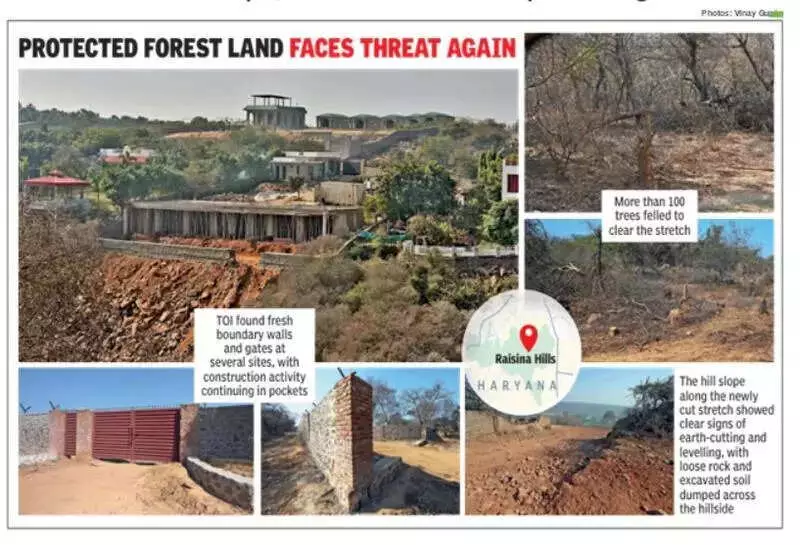
Investigators discovered a freshly carved road measuring nearly 30 meters wide cutting through the protected Raisina hills. This unauthorized construction required the felling of more than 100 trees to clear the stretch. The newly created road appears designed to connect with an existing road below the forest belt, potentially opening deeper access into the ridge area.
Large patches of land showed recent clearing activity with vegetation completely stripped from the ridge. Multiple points across the cleared zone displayed cut branches, stumps, and exposed roots where trees once stood.

Violation of Protected Area Regulations
The Raisina hills fall under the Aravali Notification of 1992, which strictly prohibits construction activities without proper permissions. This regulation specifically restricts building construction, boundary walls, road development, and tree felling in protected areas. The land is categorized as gair mumkin pahad (uncultivable hill), where non-forest activities require statutory approvals.
Environmentalist Col (retd) SS Oberoi expressed serious concern about these developments. "Even after repeated demolition drives, encroachment continues and new construction returns quickly," he stated. "The road cutting and large-scale tree felling are especially worrying because it permanently alters the ridge."
Ongoing Construction Despite Regulations
Fresh boundary walls and gates appeared at multiple sites during the inspection, with construction activity continuing in various pockets. Near farmhouse plots, one building structure supported by shuttering was under construction while construction materials and debris were stacked nearby.
Several boundary walls seemed to have been erected soon after vegetation clearance. In places where new walls were built, cut stems and exposed roots remained visible along the edges, indicating trees were removed specifically to make way for these enclosures.
At other locations, boundary walls were constructed around standing trees, effectively "capturing" them within private plots. Environmental experts note this pattern often precedes complete land clearing for future construction.
Residential Construction on Flattened Slopes
On one hilltop, approximately five houses were found to have been constructed after slope flattening. More than three two-storey buildings were also under construction in the same area, demonstrating the scale of unauthorized development.
Forest Department Response and Previous Actions
Forest officials acknowledged the developments and stated they would verify the situation. "We are carrying out action in the area and will check if any fresh construction or illegal activity is taking place," an official commented.
This is not the first time authorities have addressed violations in the Aravalis. In 2024, the National Green Tribunal took suo motu cognisance of a report about illegal construction at Ansal's Aravali Retreat in Raisina. The tribunal issued notices to authorities and described the rebuilding of razed structures as a "flagrant violation" of previous orders.
Earlier, in December 2022, NGT directed the Haryana and Rajasthan governments to establish a monitoring committee and conduct periodic reviews until all encroachments are cleared from Aravali land in Gurgaon, Faridabad, Nuh and Alwar. The tribunal specifically instructed both states' chief secretaries to ensure compliance.
History of Illegal Structures and Enforcement Challenges
A forest department survey previously identified hundreds of illegal farmhouses on Aravali land in Gurgaon district. These unauthorized structures concentrate in pockets including Gwalpahari, Abheypur, Gairatpur Bas, Sohna, Raisina and Manesar. Authorities submitted a detailed list of illegal structures and locations to NGT in the Sonya Ghosh matter.

While demolition drives have occurred in Raisina, environmentalists argue the fresh road cutting and vegetation clearance demonstrate ongoing enforcement weaknesses. The pattern suggests that despite periodic actions, illegal construction continues to resurge in this protected area.





