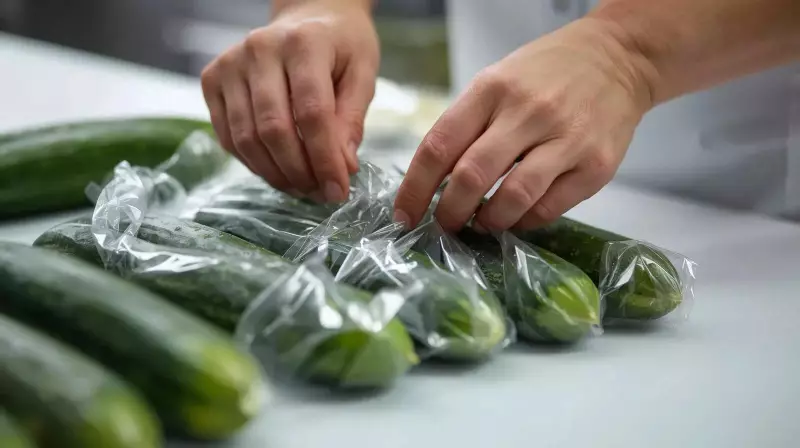
It's a common sight in supermarkets that sparks instant frustration for many environmentally conscious shoppers: a single cucumber, tightly sealed in a sheath of clear plastic, sitting amidst piles of unwrapped produce. The immediate thought is one of unnecessary waste in a world already drowning in plastic pollution. However, the reality behind this ubiquitous packaging is far more complex than it appears, involving a critical trade-off between plastic use and massive food waste.
The Science Behind the Shrink Wrap
Cucumbers are composed of about 96% water, making them refreshing but highly perishable. Once harvested, they begin to lose moisture rapidly. Without protection, this water loss during long-distance transport and storage can render firm cucumbers limp, shriveled, and unsellable, leading directly to food waste. The thin plastic wrap acts as a crucial barrier, significantly slowing down this dehydration process.
A pivotal study published in the journal Frontiers in Sustainable Food Systems examined this very issue. Researchers analyzed the supply chain for cucumbers transported from Spain to Switzerland. Their findings were striking: plastic wrapping reduced cucumber losses by nearly 5%. While this percentage may seem modest, it translates to a massive saving of produce when scaled to the millions of cucumbers shipped across continents.

Food Waste: The Hidden Environmental Cost
The study conducted a comprehensive environmental assessment, comparing the impact of producing and discarding the plastic wrap against the impact of growing cucumbers that end up as waste. The conclusion was clear and counterintuitive for many.
The environmental benefit of reducing food waste was nearly five times greater than the harm caused by the plastic itself. Growing food is an intensive process, consuming land, water, fertilizers, labor, and fuel for transport. When a cucumber is thrown away, all these resources are wasted too. The researchers offered a powerful analogy: the environmental cost of spoiling one unwrapped cucumber is equivalent to discarding 93 pieces of plastic wrap.
Beyond moisture retention, the plastic also provides other benefits. It offers a layer of protection against bruising and scratches during handling—cosmetic flaws that often lead shoppers to reject produce. It also limits oxygen exposure, slowing microbial growth and extending shelf life by several days, which is crucial in long supply chains.
Local vs. Global: Context Matters
The Swiss study's findings are specific to long, international supply chains, such as transporting produce from warmer climates like Spain to cooler regions like Switzerland. In such scenarios, the packaging's role in preventing waste is significant.
However, the calculus changes for locally grown, in-season cucumbers. If the travel distance is short and the produce is sold quickly, the protective benefits of plastic diminish. In these cases, the environmental footprint of the wrapping itself may outweigh the minimal waste prevention, especially if local recycling systems for such thin films are ineffective.
While alternatives like edible coatings or reusable containers are being explored, they are not yet widespread or without their own environmental costs. For now, plastic remains a cheap, lightweight, and highly effective tool for a global food system—a complicated solution to an even more complicated problem of waste.