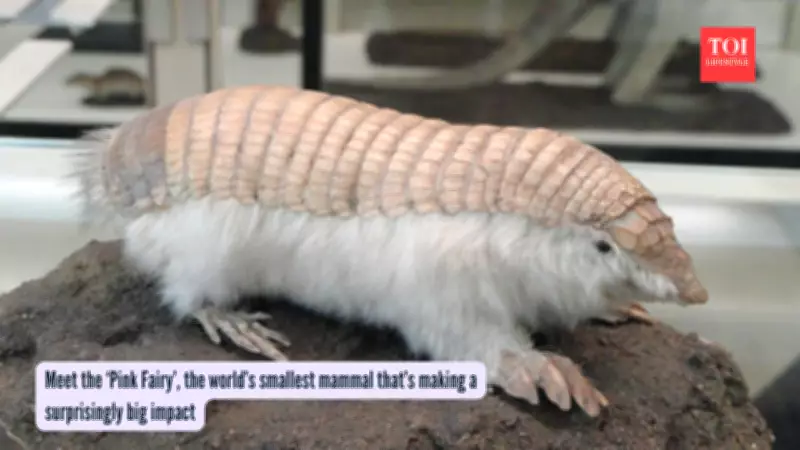
Pink Fairy Armadillo Reappears in Argentina, Sparking Conservation Excitement
Nature hosts an incredible array of organisms, each playing a vital role in sustaining biodiversity. When any of these species begins to disappear due to threats like land encroachment and shifting weather patterns, it creates a significant imbalance in the environment. One such unique organism, affectionately known as the 'pink fairy,' which had vanished from sight several years ago, has now made a remarkable comeback.
The Elusive 'Pink Fairy' Armadillo
This tiny, shovelnose-like mammal, scientifically referred to as the pink fairy armadillo, has been spotted in Argentina's Ñacuñán Biosphere Reserve, sending waves of excitement through the global conservation community. The creature is so small and secretive that even a single sighting is considered a major scientific event. Adults measure only about 3 to 4 inches in length, roughly the size of a standard credit card, and they inhabit the arid underground regions of central Argentina.
According to an IUCN Red List profile, the pink fairy armadillo is primarily nocturnal and spends the vast majority of its life beneath the soil, making it rarely seen except by sheer chance. The IUCN currently classifies the species as "Data Deficient," indicating that scientists lack sufficient information to accurately assess its risk of extinction. The profile also notes that the animal is highly sensitive to stress and can be harmed by activities such as ranching and farming, which fragment its habitat and introduce domestic predators like dogs and cats.

Ecological Importance of the Pink Fairy Armadillo
Beyond its enchanting nickname, the pink fairy armadillo serves a crucial practical function in its dry habitat. A species assessment by the Argentine Mammal Society describes it as an insect-eating animal that helps control certain insect populations. Additionally, its burrowing behavior aerates the soil and recycles nutrients, which is essential in arid regions where rainfall is rare and unpredictable.
In such dry environments, soil structure is critical for water absorption and runoff management. The way water infiltrates or runs off depends heavily on soil porosity and connectivity—an invisible service provided by animals like this armadillo through their digging activities. This highlights how even small, overlooked species can have a profound impact on ecosystem health.
Significance of the Recent Sighting
In the Ñacuñán Biosphere Reserve located in Mendoza province, rangers and local residents have successfully recorded the pink fairy armadillo once again. A government press release from Mendoza emphasized that each confirmed sighting is "a concrete sign that the ecosystem works," as the species relies on a complex chain of conditions that can be disrupted by even minor changes in land use.
Biodiversity director Ignacio Haudet stated that these sightings underscore the importance of protecting entire habitats, not just the most scenic or obvious areas. Protected areas director Iván Funes Pinter added that Ñacuñán does not merely conserve picturesque landscapes; it preserves "complete ecological dynamics" that enable unique, often overlooked species like the pink fairy armadillo to thrive.
Challenges in Studying and Protecting the Species
Why have sightings of the pink fairy armadillo become so rare in the region? The species is exceptionally difficult to study, leaving scientists without basic details such as population size and underground movement patterns. A 2015 study published in the journal Mammalian Biology suggested that climate fluctuations in arid regions may partly explain why these armadillos are so infrequently detected. This lack of data complicates conservation efforts, making each new sighting a valuable piece of the puzzle for understanding and protecting this enigmatic creature.