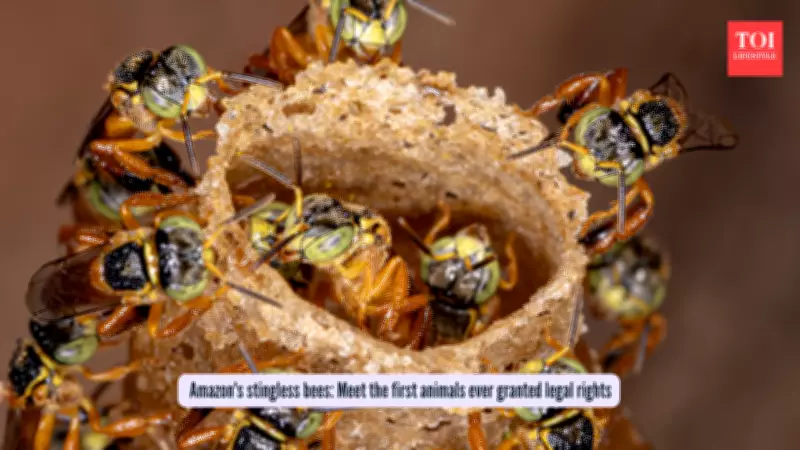
Peru's Amazon Stingless Bees Become World's First Insects with Legal Rights
In a groundbreaking development that sounds like it could be straight out of a Pixar film, tiny bees in the Amazon rainforest have achieved a monumental legal milestone. Stingless bees in Peru have become the world's first insects to be granted legal rights, creating a powerful shield to protect these crucial pollinators from the devastating impacts of deforestation and harmful pesticides.
Meet Amazon's New Legal Residents
Stingless bees in Peru's Amazon region, particularly within the municipalities of Satipo and Nauta, have now been officially recognized as rights-bearing subjects with legal status. According to an Earth.com report, Satipo's ordinance within the Avireri-Vraem Biosphere Reserve provides enforceable safeguards that follow national legislative updates, creating a robust framework for protection.
Chemical biologist Rosa Vásquez Espinoza of Amazon Research International collaborated closely with Asháninka communities to transform extensive field data into actionable legislation. Constanza Prieto of the Earth Law Center emphasized the significance of this development, stating, "This ordinance marks a turning point in our relationship with nature: it makes stingless bees visible and recognizes them as rights-bearing subjects."

The Vital Role of Stingless Bees in Rainforest Ecosystems
These native bees, which lack true stings, have been pollinating the Amazon rainforest for countless generations. Remarkably, half of the world's approximately 500 stingless bee species thrive in this region. In Peru alone, more than 175 different types support over 80% of rainforest plants, including economically important crops like cacao and coffee. Their decline has severe consequences for seed production and agricultural yields.
For indigenous communities such as the Asháninka and Kukama-Kukamiria, meliponiculture—the sustainable harvesting of stingless bee honey—represents both a food source and traditional medicine. Surveys indicate that honey from 17 different species can treat up to 14 different illnesses. This deep cultural connection to the bees provided the foundation for the legal advocacy that led to their new protected status.
Population Threats and New Legal Protections
Stingless bee populations face significant risks, with over half of their natural habitats threatened by deforestation that destroys the hollow trees essential for nesting. Illegal logging operations and widespread pesticide use directly endanger entire colonies.
Satipo's ordinance now grants these bees "inherent" rights to exist, sustain their populations, and survive in pollution-free habitats with stable climates. The legislation provides legal standing for defenders when human activities harm bee colonies or foraging areas. This precautionary approach mandates reforestation efforts and hive relocation instead of destruction whenever possible.
Community Power and Future Directions
By the time the ordinance was enacted, more than 650 local residents—including 60% women and 10% youth—had joined the conservation effort. They established 11 sanctuaries protecting approximately 22 million bees across 74 acres of land. Peru's national Law No. 32235, enacted in 2025, first recognized stingless bees at the country level, but limitations remain as local protections must contend with threats that cross municipal and national borders.
The recognition of legal rights for stingless bees represents a revolutionary approach to conservation that acknowledges the intrinsic value of non-human species. While this development is currently localized to specific Amazon regions, it establishes an important precedent that could influence environmental protection policies worldwide.