Odisha Government Formally Disputes Wildlife Institute of India's Elephant Census Figures
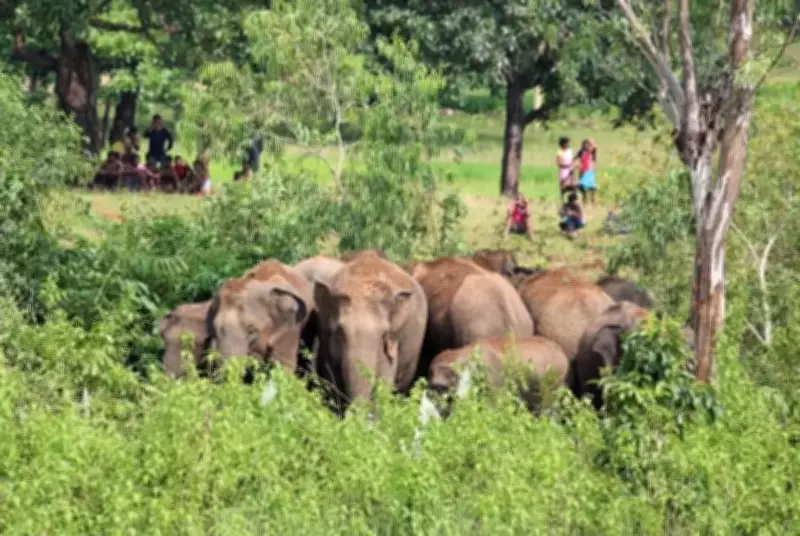
The state government of Odisha has officially written to the Ministry of Forest, Environment and Climate Change (MoEFCC), strongly contesting the elephant population numbers recently reported by the Wildlife Institute of India (WII). According to the WII's findings, which utilized a DNA sampling method through dung analysis, only 912 elephants were counted in Odisha's habitat. This figure stands in stark contrast to the state's own comprehensive census conducted in November 2024, which documented a significantly higher count of 2,103 elephants.
State Census Methodology and Historical Data
In its detailed letter dispatched in November, the Odisha government elaborated on its census methodology and historical population trends. The state's wildlife wing employed a direct sighting method for counting elephants, arguing that these mega herbivores are easily visible compared to elusive and solitary animals like tigers. This approach, officials claim, provides accurate results in a cost-effective manner. The government highlighted that in 2017, the elephant population in Odisha was recorded at 1,976. This number increased to 2,098 during the summer census of 2024 and further rose to 2,103 by November 2024.
The state expressed strong reservations regarding the WII's count of 912 elephants, emphasizing the disparity with its own data. The government has formally requested that the WII re-examine the census, including a critical review of the methodology employed. Specifically, officials have asked for a team of scientists, experts, or observers from the WII to be deputed for a thorough reassessment of the elephant census in Odisha.

Detailed Breakdown of State Census Figures
The May 2024 census conducted by the state provided a detailed demographic breakdown of the elephant population. It reported the presence of 2,098 elephants, consisting of 313 adult tuskers, 13 adult 'makhna' (tuskless males), 748 adult females, 148 sub-adult males, 282 sub-adult females, 209 juveniles, and 385 calves. Notably, the number of calves showed a positive trend, increasing from 299 in 2017 to 385 in 2024, reflecting a growth of 86 more calves. Broadly, the population comprised 474 males, 1,030 females, and 594 adults.
Officials reported a significant increase in elephant numbers across several forest divisions, including Angul, Athgarh, Dhenkanal, Baripada, Chandaka, Khurda, Bonai, and Keonjhar. However, they also noted changes in elephant movement patterns, particularly in the Angul, Rourkela, and Baripada circles.
Criticism of DNA Dung Analysis Method
Prem Kumar Jha, the Principal Chief Conservator of Forests (Wildlife), openly criticized the DNA dung analysis method used by the WII, labeling it as inaccurate. Jha confirmed that he has discussed the matter with the MoEFCC, advocating for a re-evaluation of the census. He reiterated the state's preference for the direct sighting method, which he believes is more reliable and less complex than the high-cost DNA approach.
Conservation Concerns and Corridor Issues
Biswajit Mohanty from the Wildlife Society of Odisha (WSO), a private organization dedicated to wildlife conservation, provided additional context. While acknowledging that the results from the new DNA methodology are not directly comparable to past data, Mohanty pointed out that Odisha has recorded a sharp population decline of nearly 1,100 elephants, representing a 57% drop in one year. He attributed this decline to severe degradation of elephant corridors due to quarrying and developmental activities.
Mohanty further highlighted a longstanding issue: the forest department has failed to notify 14 identified elephant corridors, despite a government decision in 2012 to do so. Although the National Green Tribunal issued final orders for the notification of these corridors, the state government challenged this decision and obtained a stay order from the high court, delaying critical conservation measures.

The ongoing dispute underscores the complexities of wildlife census methodologies and the urgent need for accurate data to inform conservation strategies. The Odisha government's call for a reassessment reflects its commitment to ensuring that elephant population figures are both reliable and representative of the actual situation on the ground.